
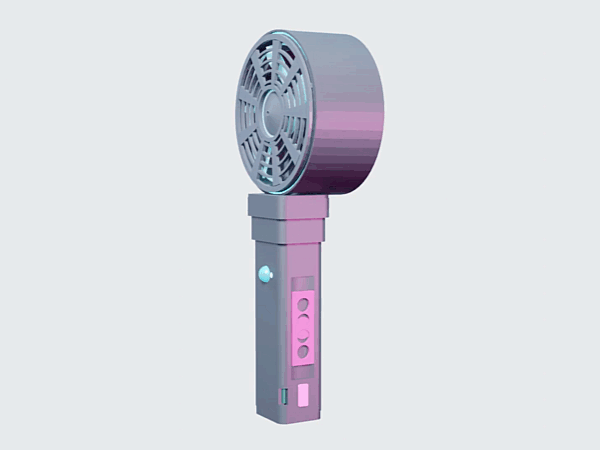
For startups bringing a physical product to market, the stakes are incredibly high. Traditional product development relies heavily on physical prototyping, an expensive and time-consuming cycle of building, testing, breaking, and redesigning. For a lean startup, this iterative loop can quickly drain precious capital and delay launch dates. Computer-Aided Engineering (CAE) offers a powerful alternative, allowing entrepreneurs to build, test, and optimize their products entirely in a virtual environment before cutting a single piece of steel for manufacturing.
To understand the transformative impact of this technology, we can look at the development of a ubiquitous consumer product: the portable, handheld electric fan. While it seems simple on the surface, a handheld fan presents complex engineering challenges, requiring a delicate balance of aerodynamics, structural integrity, and ergonomic design. By utilizing a CAE-driven workflow, a startup can transform this basic concept into a market-ready, high-performance product at a fraction of the traditional cost.
The Foundation in Detailed CAD Design
The journey begins with Computer-Aided Design (CAD), where the initial industrial design is transformed into a precise 3D digital blueprint. For our portable fan, this means modeling the internal motor mounts, the battery compartment, the ergonomic handle, the protective grille, and the fan blades. CAD software allows the startup to ensure that all internal components fit seamlessly within a compact enclosure.
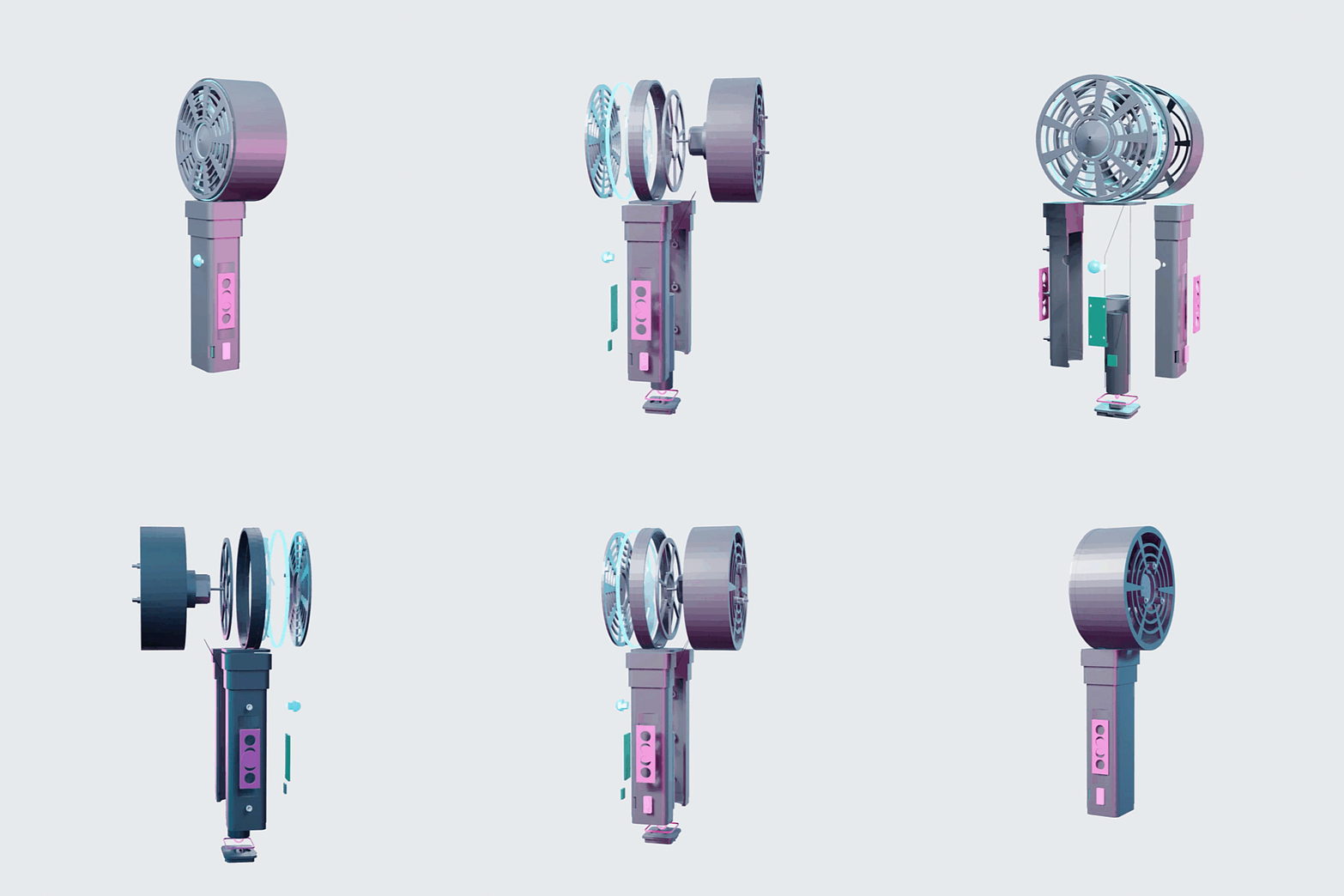
However, a static CAD model only shows where parts sit; it cannot predict how they will behave in the real world. This is where the model transitions into the broader CAE ecosystem. The digital geometry created in CAD serves as the foundational data layer for subsequent physics-based simulations, ensuring that any modifications made later to improve airflow or strength are instantly reflected in the master design.
Optimizing Airflow with CFD
A portable fan’s primary job is to move air efficiently while consuming minimal battery power. To achieve this, startups leverage Computational Fluid Dynamics (CFD). CFD simulates how air flows around the fan blades and through the protective housing. By running fluid simulations, engineers can visualize velocity vectors, pressure distributions, and areas of turbulent airflow that cause unwanted noise.
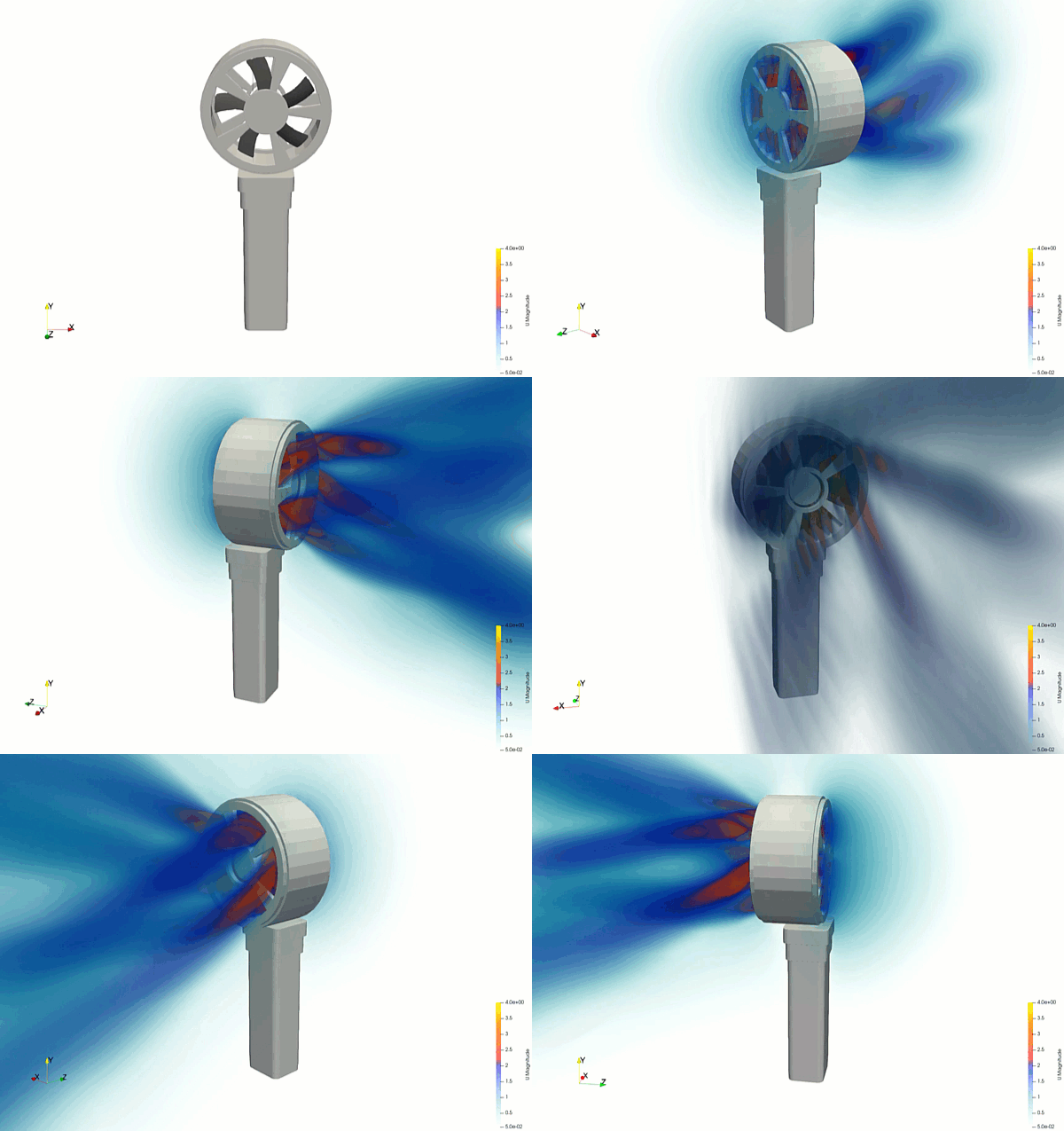
Fan Airflow OpenFOAM CFD Simulation
For a startup, CFD removes the guesswork from blade design. Engineers can virtually test dozens of blade shapes, pitches, and counts within days. They can optimize the aerodynamic efficiency of the blades to maximize volumetric airflow while reducing drag on the electric motor. This directly translates to a quieter product and a longer battery life—two major selling points in a crowded consumer market that would otherwise require dozens of expensive wind-tunnel prototypes to achieve.
Ensuring Durability Through FEA Drop Tests
Consumer electronics are inevitably subjected to everyday accidents, and a handheld fan is highly likely to be dropped on concrete or bumped against hard surfaces. Ensuring the fan doesn’t shatter upon impact is crucial for brand reputation and minimizing warranty claims. Instead of manufacturing hundreds of plastic shells just to drop them from various heights and angles, the startup can use Finite Element Analysis (FEA) to conduct virtual drop tests.
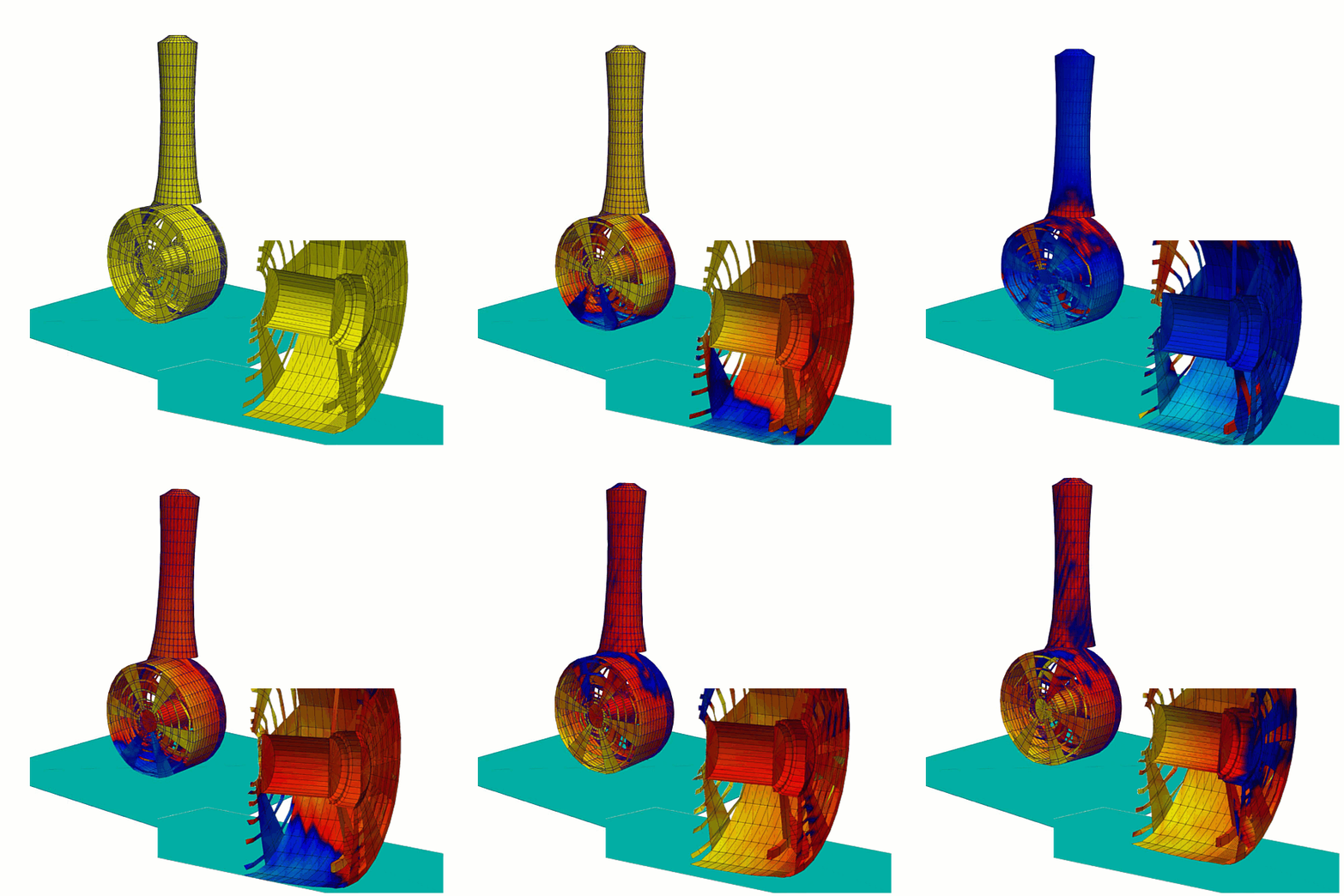
Portable Fan Drop Test with FEA OpenRadioss
FEA breaks down the fan’s CAD geometry into a mesh of millions of tiny elements to calculate how stress propagates through the material during an impact. A simulated drop test reveals exactly where the plastic housing is prone to cracking, whether the internal clips holding the battery will snap, and if the outer grille will deform enough to jam the fan blades. Armed with this data, the startup can strategically add structural ribs or adjust wall thicknesses only where needed, keeping the product lightweight and cost-effective while ensuring rugged durability.
The Startup Advantage: Speed and Capital Efficiency
Integrating CAE into the development of a physical product like a handheld fan fundamentally changes a startup’s economics. By replacing physical trial-and-error with high-fidelity digital simulations, companies can catch critical design flaws early in the development cycle when they are cheapest to fix. When the startup finally invests in expensive injection molds for mass production, they do so with absolute confidence that the product will perform beautifully, feel durable, and manufacture seamlessly. Ultimately, CAE democratizes advanced engineering, giving agile startups the tools to out-innovate larger competitors and bring superior physical products to market faster than ever before.
Author: Caesar Wiratama
Find me on Linkedin