
When building a complex hardware product like a modern vacuum cleaner, the greatest trap is attempting to build a beautiful, finished product on day one. A polished exterior often masks fundamental engineering flaws, making troubleshooting nearly impossible. True innovation relies on iterative prototyping—a systematic approach of building, testing, and refining a product through manageable stages. By breaking a grand vision down into isolated variables and functional sub-systems, engineers can create a highly efficient machine that works perfectly before a single piece of aesthetic plastic is ever molded.
Isolate Your Variables
The foundation of successful prototyping lies in the engineering ethos of James Dyson: test only one change at a time. When developing a vacuum cleaner, a multitude of factors affect performance, from fluid dynamics to seal integrity. If you modify the fan blade shape, change the filter material, and alter the exhaust port all in a single iteration, you corrupt your data. If the suction power drops after that test, you will have no idea which of the three changes caused the failure. By isolating your variables and changing only one component per test, you ensure that every data point is clear, actionable, and mathematically traceable.
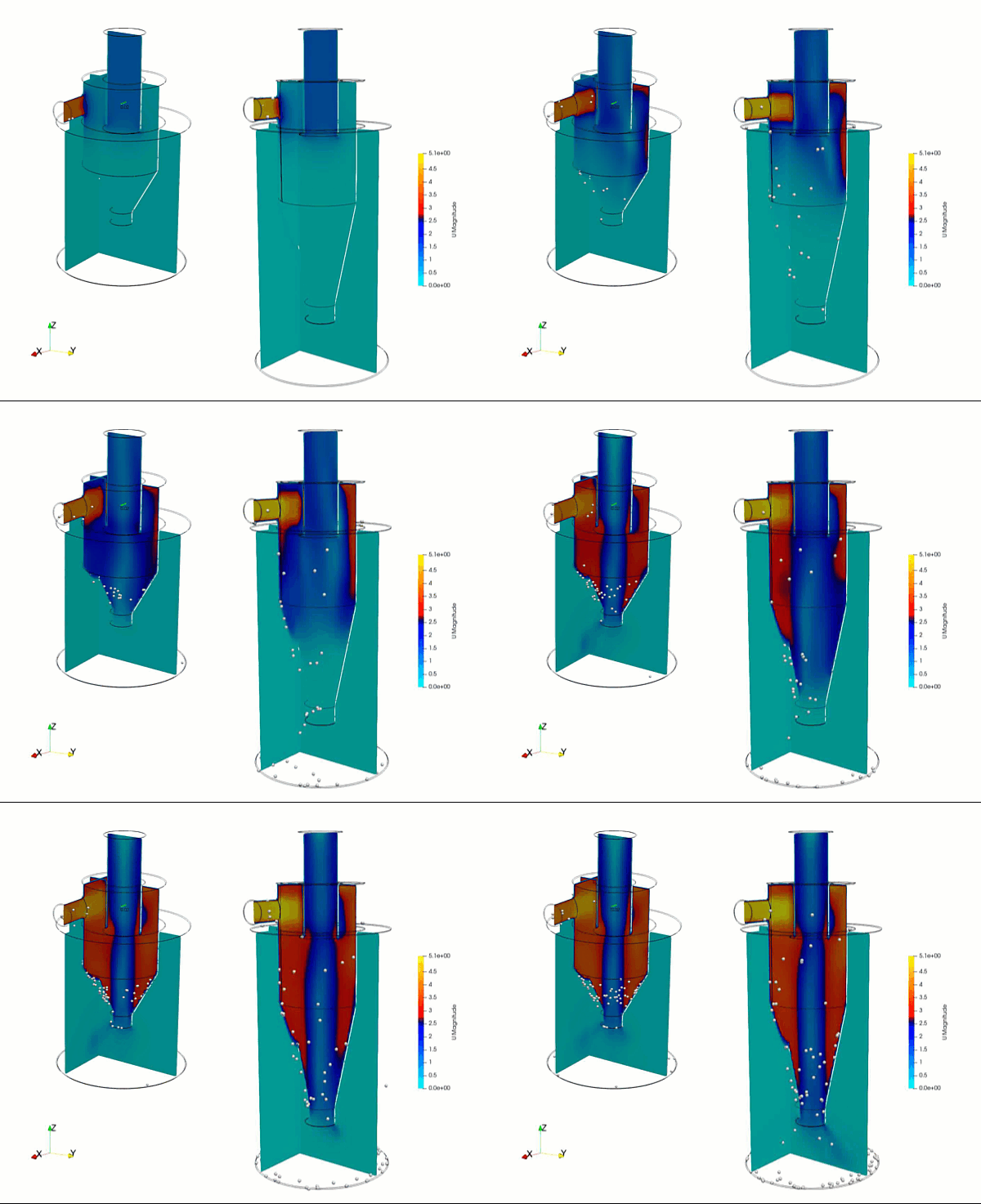
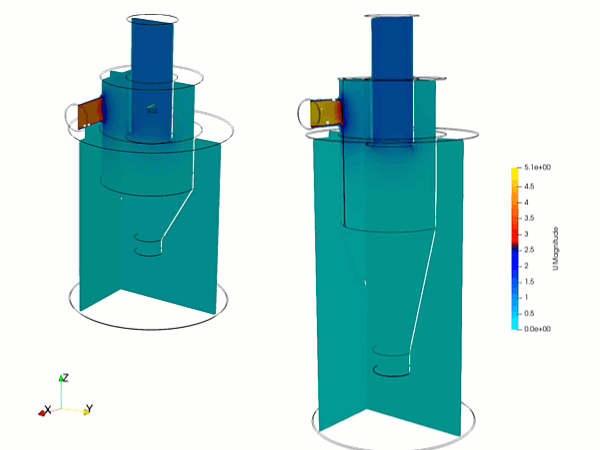
Comparing two different cyclone dimension with Computational Fluid Dynamics
Low-Fidelity Proof of Concept
Before investing heavily in manufacturing, engineers must focus on creating a low-fidelity Proof of Concept (PoC). This stage is not about how the product looks, but how it behaves. Utilizing accessible, free computer-aided design (CAD) software like FreeCAD allows teams to quickly model individual internal elements. These designs can then be brought to life using 3D printing to rapidly test different impeller geometries, fan blade angles, airflow dynamics (CFM), and seal efficiencies. This rapid feedback loop allows you to fail quickly and cheaply, optimizing the core physics of the machine before moving forward.
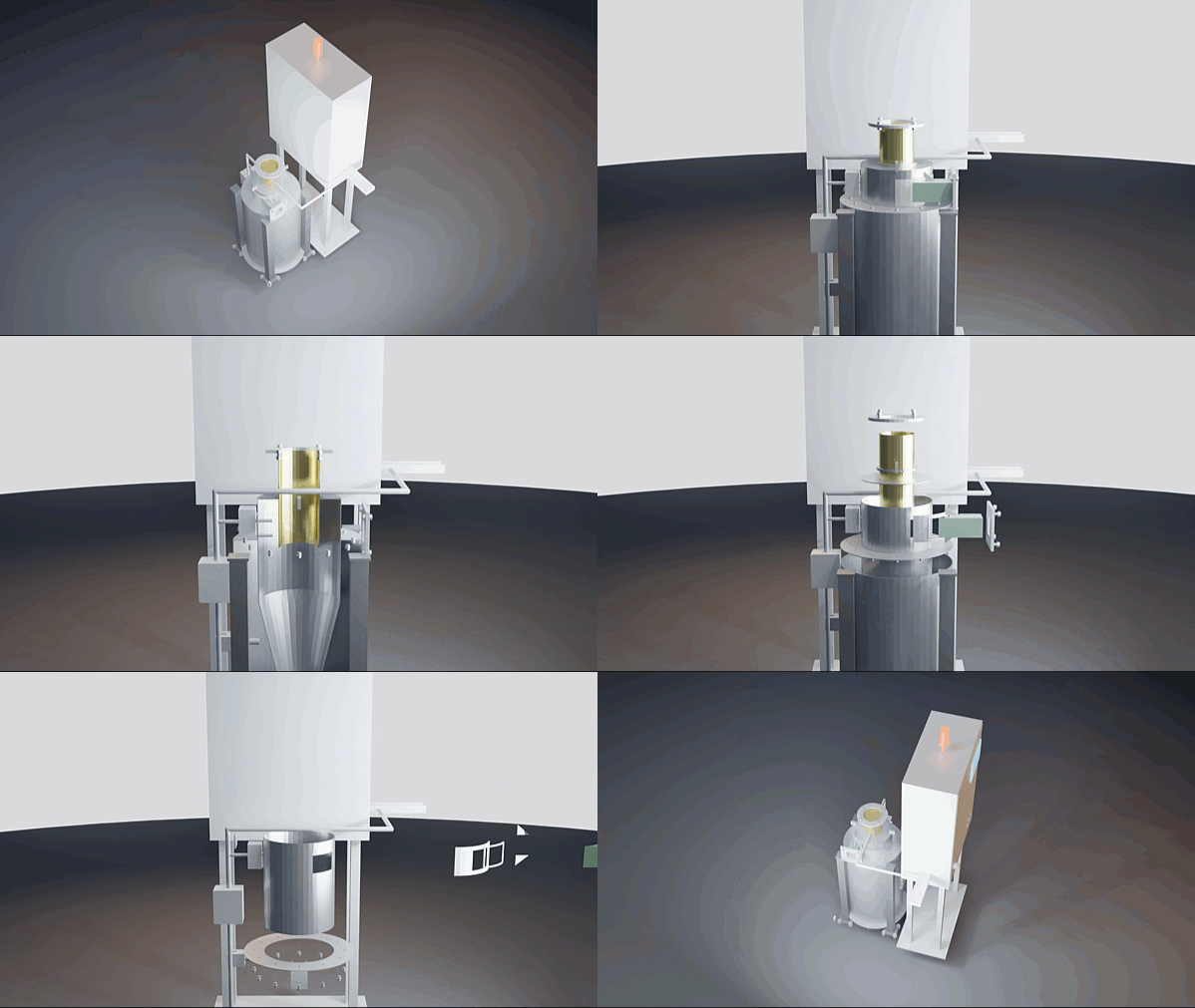
Conceptual Design of a Dust Collector using FreeCAD
Integrate Sub-systems
A vacuum cleaner is not a single mechanism; it is an ecosystem of moving parts. To manage this complexity, engineers break the machine down into three parallel development tracks that are later integrated into a cohesive whole.
The mechanical track focuses entirely on the physical architecture of the device. This team designs the chassis, shapes the internal air path, and refines the filtration system—whether that involves standard HEPA filters, water filtration, or complex cyclonic separation. Their primary goal is maximizing airflow and structural integrity while minimizing weight and air leaks.
The electrical track handles the power and muscle of the machine. Engineers on this track focus on selecting the optimal battery management system (BMS) to ensure safety and longevity, sourcing high-efficiency motors that deliver maximum torque, and designing the motor drivers required to handle heavy electrical currents.
The software track provides the brains of the operation. Depending on the complexity of the vacuum, this involves designing the core firmware to regulate power distribution and safety sensors. If the project is a robotic vacuum, this track expands dramatically to include autonomous mapping algorithms, obstacle detection, and pathfinding logic. By developing these three sub-systems in parallel, teams can perfect each component independently before merging them into a finished, market-ready product.
Author: Caesar Wiratama
Find me on Linkedin