
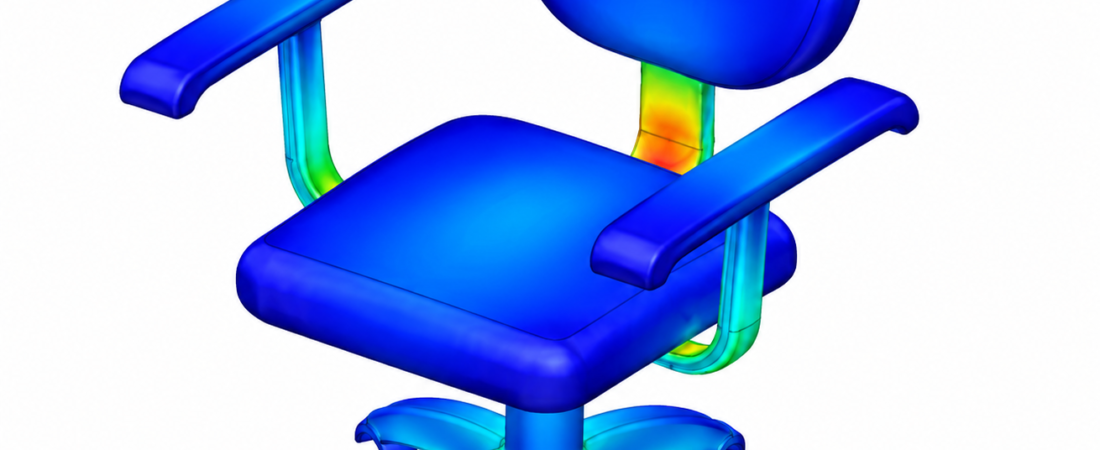
Finite Element Analysis (FEA) has become a crucial pillar in transforming the design and development process of modern office chairs. As a computer-based simulation tool, FEA allows engineers to virtually test the strength, durability, and comfort level of a chair’s structure before the first physical prototype is ever built. Through mathematical representation, the complex structure of the chair—ranging from the mesh backrest and synchronization mechanisms to the five-star base—is divided into millions of small elements to analyze how they react to various mechanical loads. This approach replaces traditional, time-consuming, and costly trial-and-error methods while providing measurable quality assurance right from the initial stages of design.
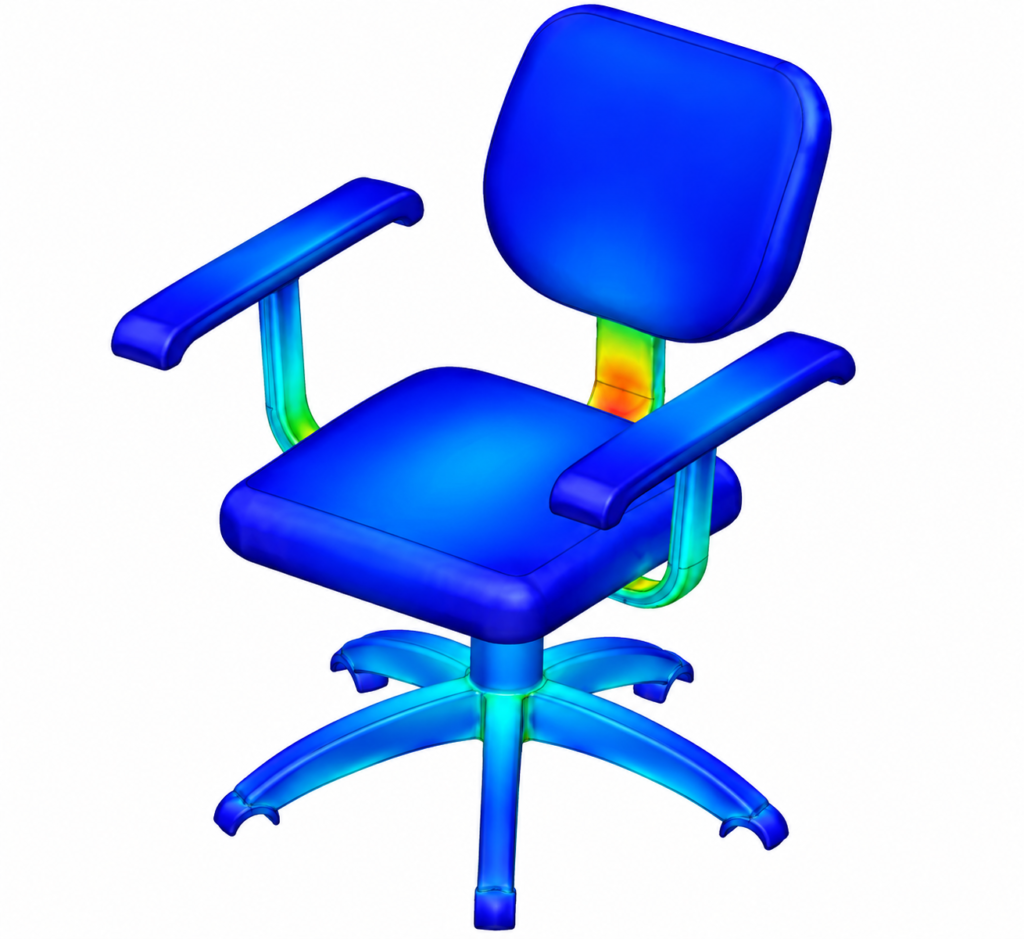
Technical Simulation of Mechanical Loads and Ergonomics
Technically, FEA for office chairs focuses on modeling extreme load scenarios that comply with international standards such as BIFMA (Business and Institutional Furniture Manufacturers Association) or EN 1335. Engineers utilize linear and non-linear static analysis to simulate vertical loads on the seat, rearward pressure on the backrest, and dynamic loads on the armrests. A primary focus is evaluating stress distribution using Von Mises criteria to identify critical hotspots that could potentially lead to structural failure or material fatigue. Additionally, non-linear simulations are applied to flexible plastic components and foam materials to ensure that any deformation still maintains ergonomic value and user thermal comfort without sacrificing the structural integrity of the component.
Material Optimization and Component Weight Reduction
The application of FEA opens up massive opportunities for topology optimization, a technique used to determine the most efficient material distribution within a given design space. Through optimization algorithms, the computer can recommend reducing wall thickness in injection-molded plastic components or aluminum frames without compromising mechanical strength. This lightweighting process is vital in office chair design to minimize the use of premium raw materials. FEA also assists in evaluating the behavior of composite materials or recycled plastics, ensuring that eco-friendly material substitutions still meet strict technical specifications and do not cause premature failure under long-term cyclic loading.
Accelerating Time-to-Market and R&D Cost Efficiency
From a business and product development perspective, FEA delivers significant strategic value by accelerating product time-to-market. By detecting design flaws in a virtual environment, product development teams can cut physical prototyping and testing cycles by more than fifty percent. Every physical iteration eliminated translates directly to cost savings on expensive production tooling, raw materials, and laboratory testing fees. This rapid digital iteration enables furniture companies to be highly adaptive to market trends, respond agilely to consumer demands, and secure a massive competitive advantage in a fast-moving industry.
Mitigating Warranty Risks and Enhancing Brand Equity
Investing in FEA simulations early in the design phase acts as a long-term quality insurance policy for the business. Office chairs are designed for intensive use over thousands of hours per year, meaning the risk of warranty claims due to broken or worn-out components can heavily strain a company’s finances. Through fatigue analysis in FEA, a chair’s reliability over a 5 to 10-year lifecycle can be predicted with high accuracy. The end result is a product with superior durability, minimizing product recalls and lowering warranty claim rates. This consistent product reliability directly boosts customer satisfaction, builds a strong brand reputation as a premium furniture manufacturer, and drives loyalty in both B2B and B2C markets.
Author: Caesar Wiratama
Find me on Linkedin