
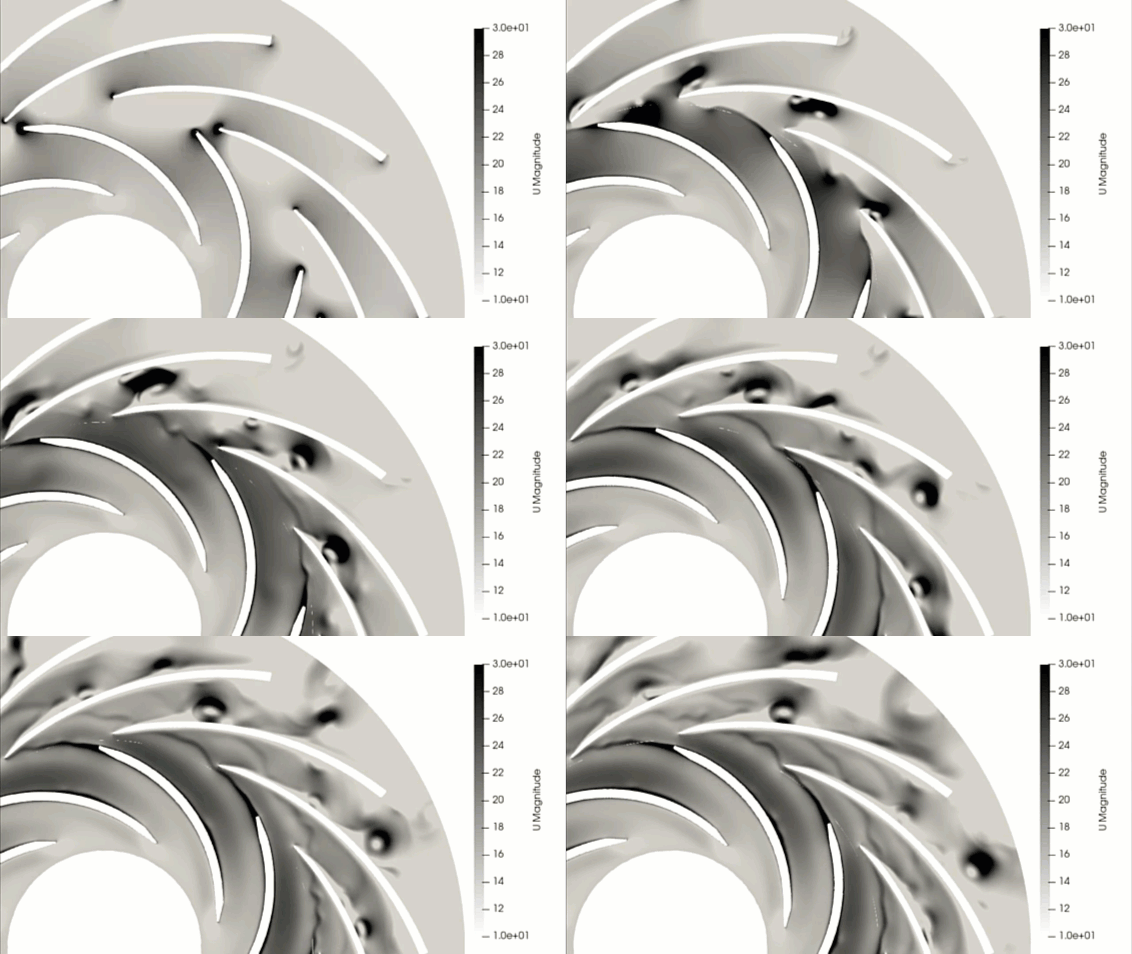
In modern manufacturing and product development, businesses face intense pressure to innovate faster while reducing cost and risk. To meet these demands, engineering teams rely heavily on Computer-Aided Engineering (CAE). Traditional CAE tools use simplified mathematical models to approximate how a product will behave in the real world. However, as products become more complex, these approximations can lead to inaccuracies. This is where high-fidelity CAE simulations come into play, offering an unprecedented level of accuracy by capturing the physics of a system with minimal simplification.
High-fidelity CAE refers to advanced computational modeling that simulates physical phenomena—such as fluid dynamics, structural mechanics, electromagnetics, and thermal management—using extremely fine meshes, exact geometry, and complex, non-linear material behaviors. Instead of relying on assumptions or idealized conditions, high-fidelity simulations use massive computing power to replicate real-world environments with extreme precision. This allows engineers to observe micro-level interactions, transient effects, and complex failure modes that lower-resolution models frequently miss.
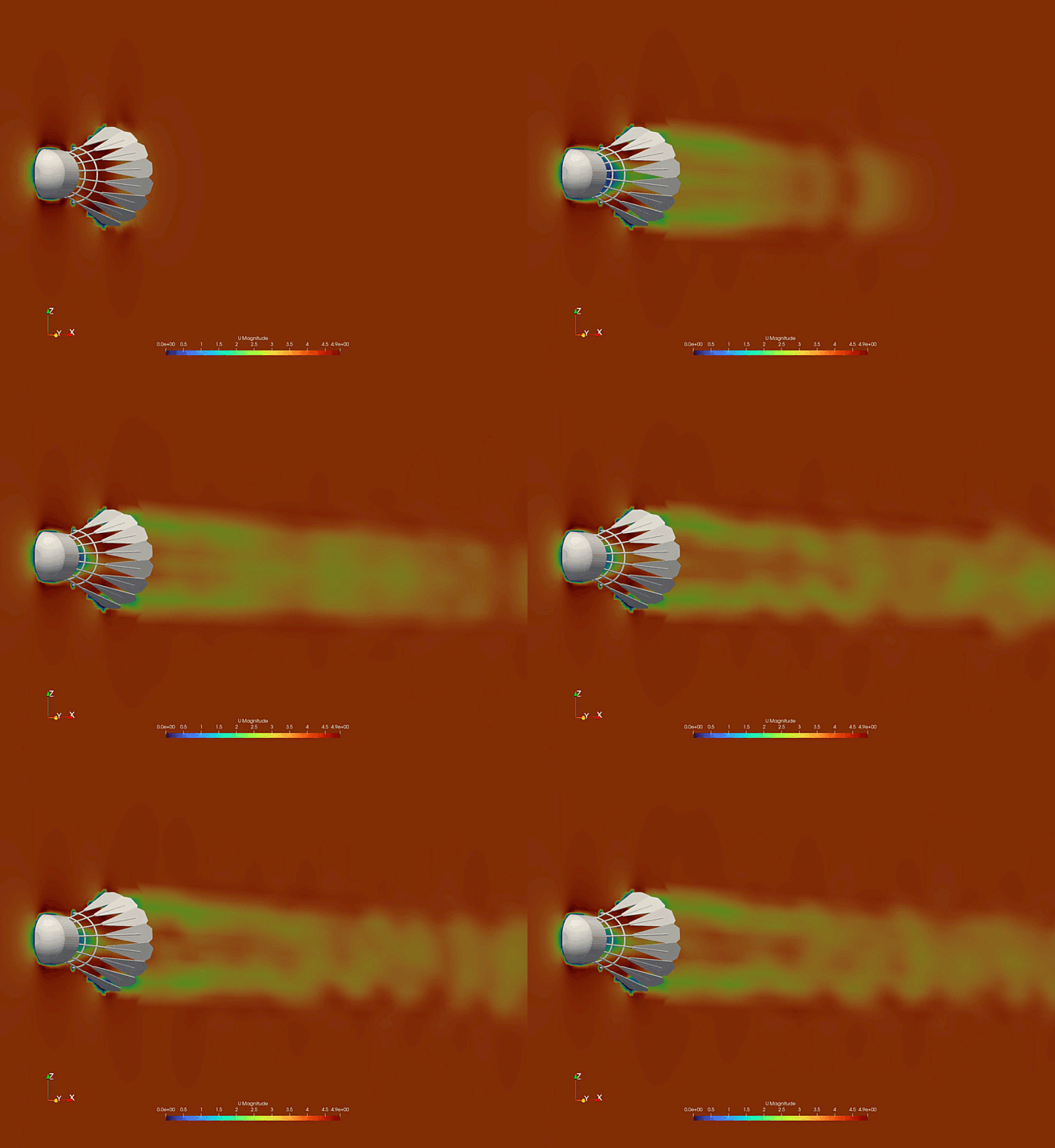
Computational Fluid Dynamics (CFD)
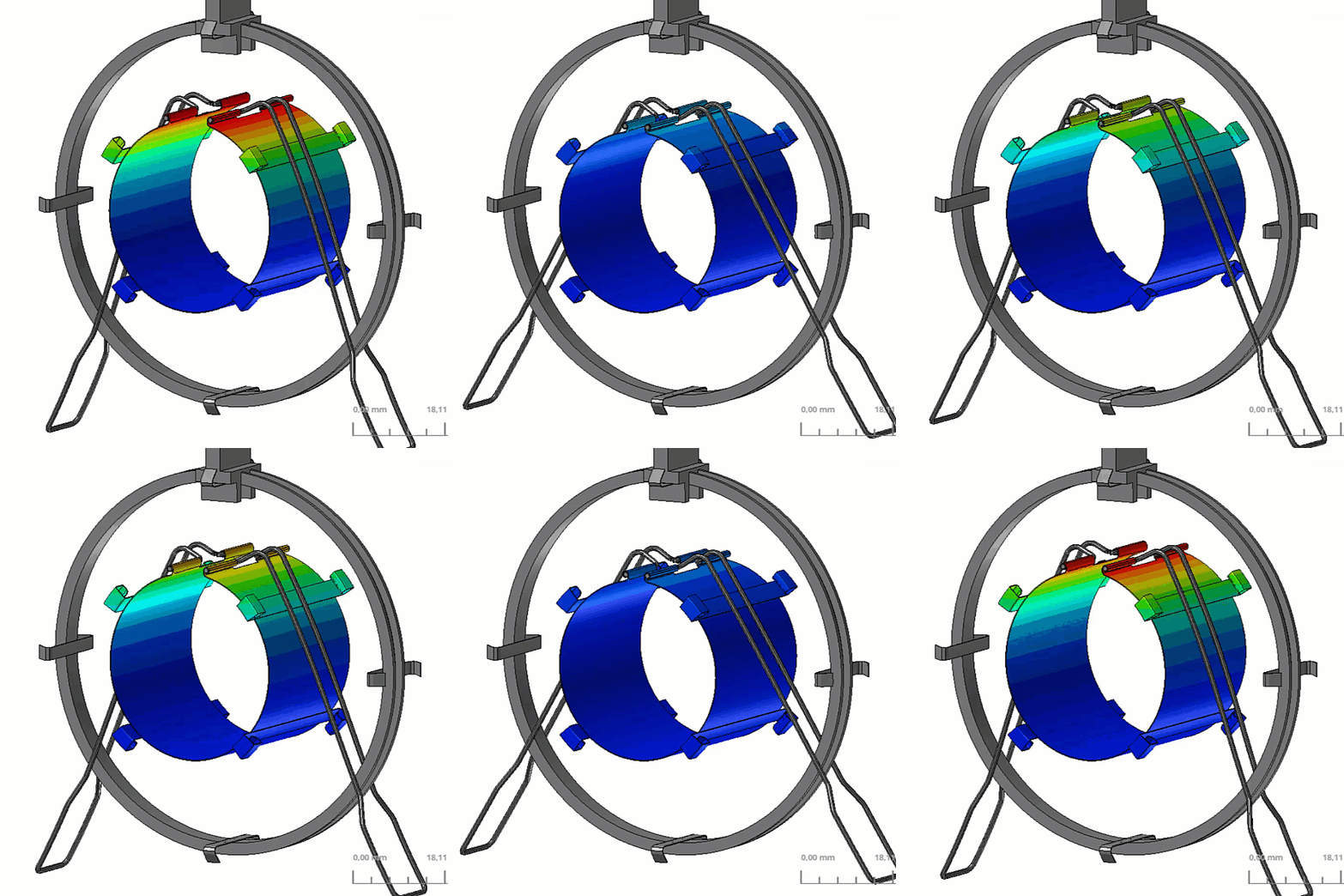
Finite Element Analysis (FEA)
Transforming the Product Design Process
The integration of high-fidelity CAE simulations fundamentally changes how products are designed and engineered. In a traditional workflow, engineers design a component, build a physical prototype, test it until it breaks, and then redesign it based on the failure analysis. This loop is slow and expensive. High-fidelity simulation shifts this process almost entirely into the digital realm. Because the simulation results mirror reality so closely, engineers can confidently test hundreds of design iterations virtually before a single piece of hardware is ever manufactured.
Beyond replacing physical prototypes, these advanced simulations allow for deeper optimization during the conceptual phase. Designers can push boundaries and explore radical new geometries, lightweight structures, or novel composite materials without the fear of costly physical failures. It gives engineering teams the freedom to ask “what if” questions and receive highly reliable data in return, ensuring that the final design is optimized for performance, durability, and manufacturability long before it reaches the factory floor.
Improving Overall Business Processes
From a broader business perspective, high-fidelity CAE acts as a catalyst for operational efficiency and risk mitigation. One of the most significant commercial benefits is the drastic reduction in time-to-market. By minimizing the reliance on physical prototyping cycles and eliminating unexpected late-stage design changes, companies can launch products months ahead of their competitors. This agility is a massive competitive advantage in fast-moving industries like automotive, aerospace, and electronics.
Furthermore, high-fidelity simulation directly impacts the bottom line by lowering development and warranty costs. Physical testing requires specialized facilities, materials, and labor, all of which incur heavy expenses. Virtual testing removes the bulk of these costs. Additionally, by identifying hidden flaws, stress concentrations, and fatigue points early in the design phase, businesses can prevent catastrophic product failures after launch. This protects the company from expensive product recalls, warranty claims, and potential damage to brand reputation.
Engineering Excellence with Tensor En
Achieving this level of precision requires sophisticated software, immense computational resources, and specialized engineering expertise. Tensor En bridges this gap by providing world-class, high-fidelity CAE simulation services tailored specifically for advanced product design. By leveraging cutting-edge simulation technologies and scalable high-performance computing, Tensor En empowers businesses to solve their most complex engineering challenges without the burden of maintaining expensive in-house infrastructure. Partnering with Tensor En allows your development team to unlock deep insights, accelerate innovation cycles, and bring superior, fully optimized products to market with absolute confidence.
Author: Caesar Wiratama
Find me on Linkedin