Bringing a new physical product to market is a high-stakes race against time and capital. For startups, the product design phase is filled with critical decisions where structural failures, material waste, or unexpected performance flaws can derail a launch. Computer-Aided Engineering (CAE) simulation provides a digital testing ground to predict how a product will behave in the real world. However, building an internal simulation department is often out of reach for growing companies. By outsourcing CAE simulation to specialized freelancers, startups can fundamentally improve their business processes, reduce overhead, and accelerate their time-to-market.
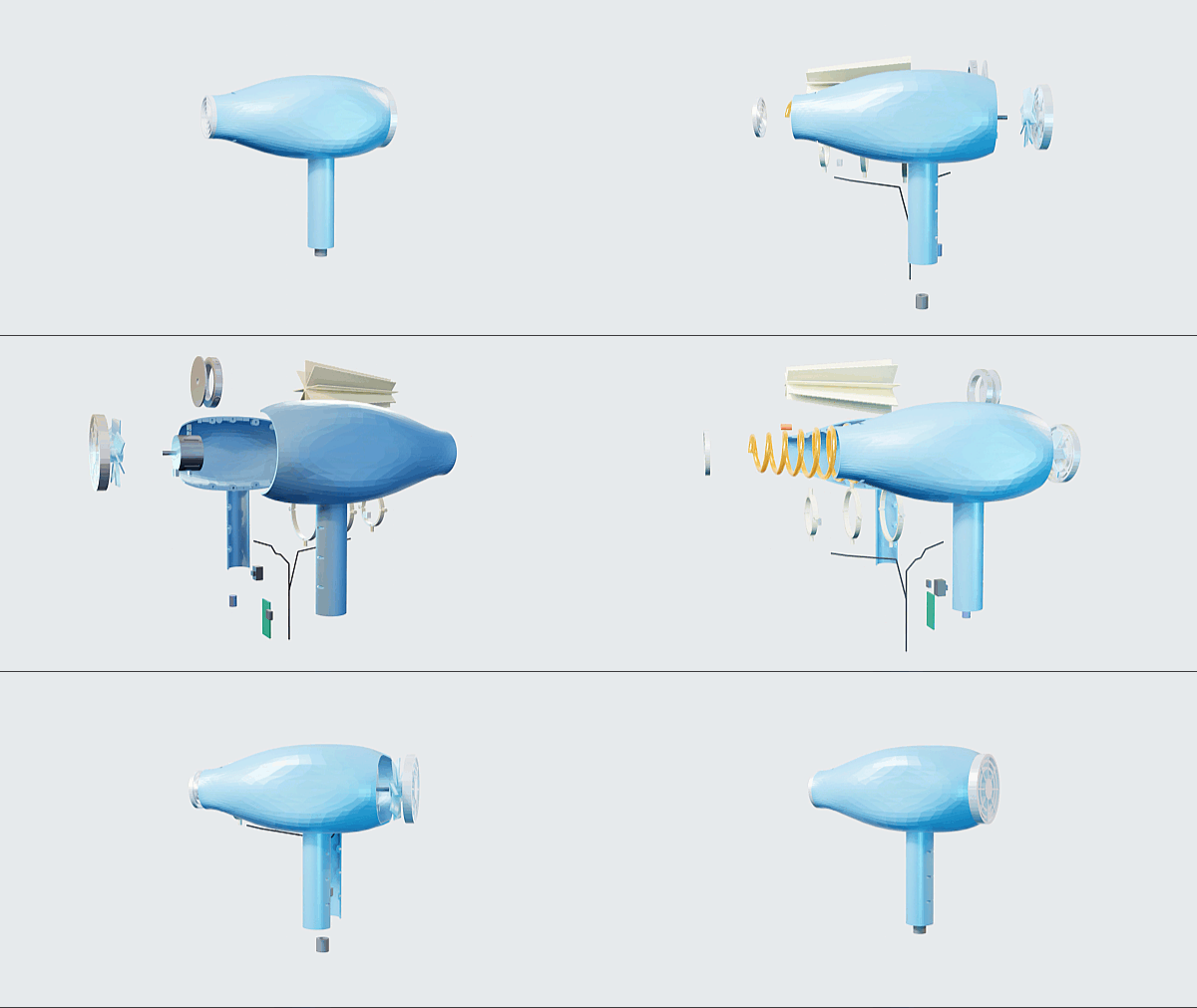
Detailed Design
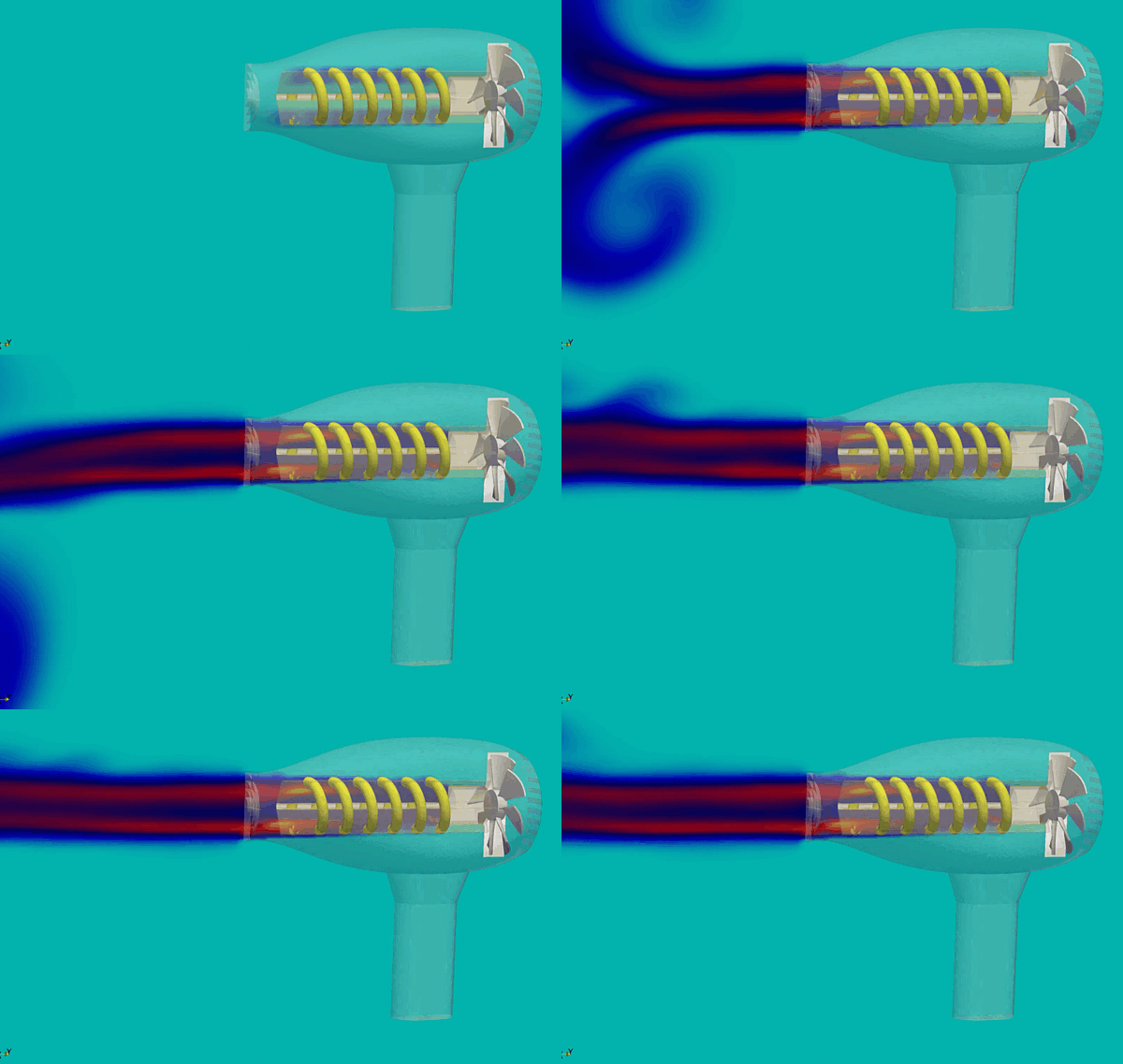
Flow and Thermal
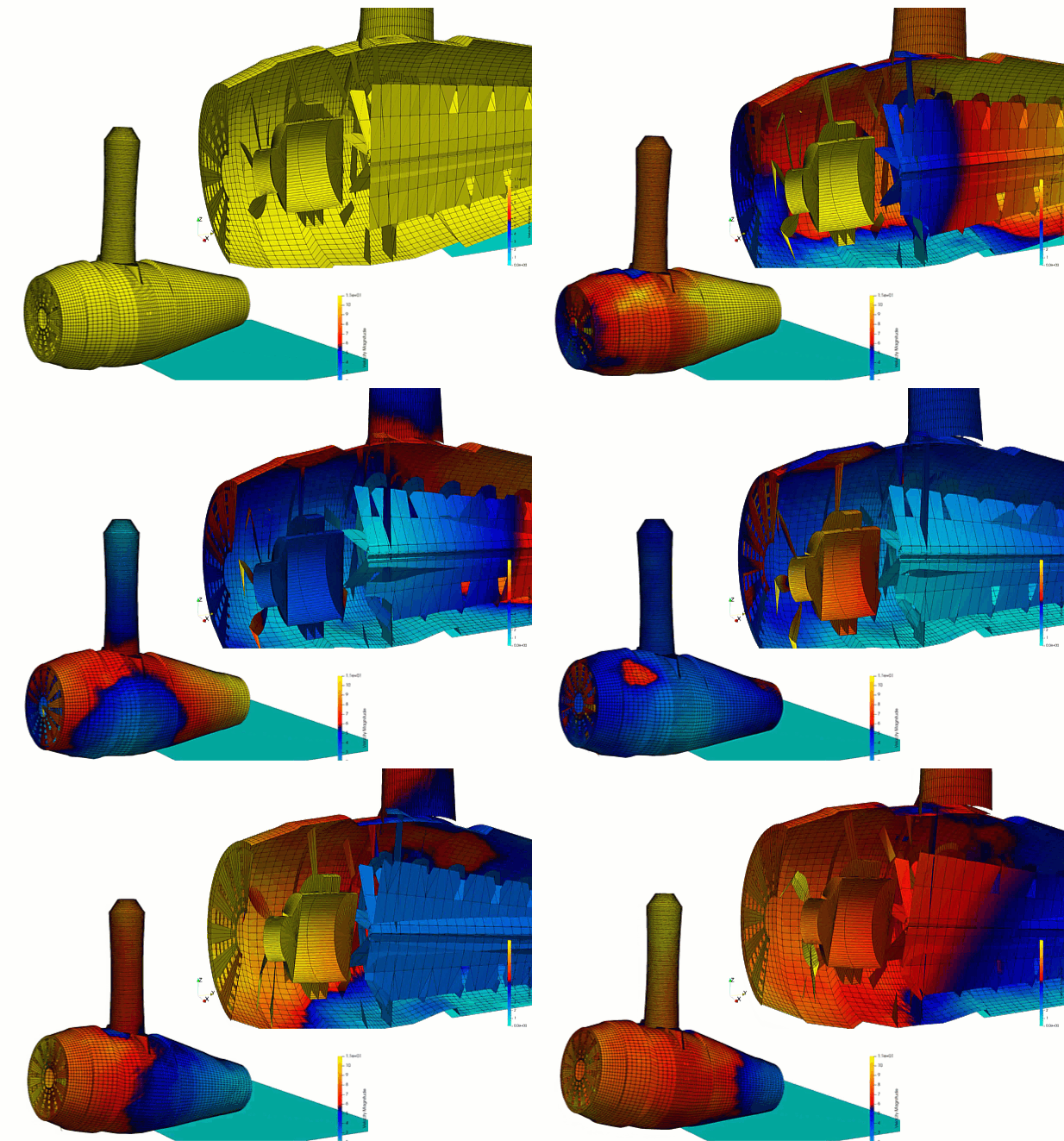
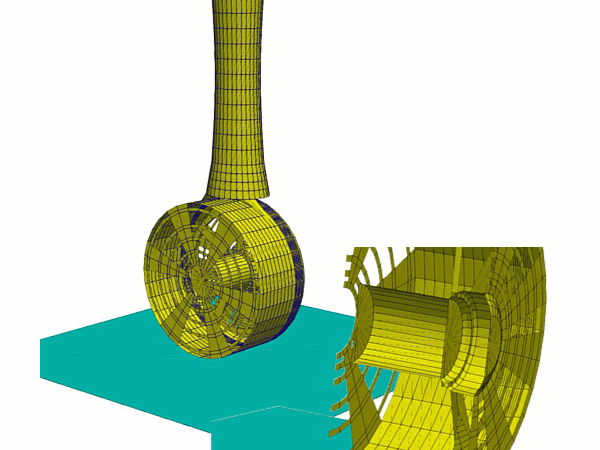
Drop Test
Eliminating Massive Capital Expenditures
The traditional path to implementing CAE involves significant financial hurdles. Specialized simulation software licenses routinely cost thousands of dollars annually per user, and running these complex mathematical models requires high-performance computing hardware. Combined with the salary of a full-time, specialized simulation engineer, the upfront investment can drain a startup’s seed funding. Freelancers already own the necessary software licenses and computing infrastructure. Outsourcing allows startups to convert what would be a massive fixed overhead cost into a flexible, project-based operational expense, preserving precious capital for marketing and scaling.
Bridging the Engineering Skills Gap
Physical product design requires a broad spectrum of engineering disciplines, ranging from injection molding analysis and thermal management to structural optimization and fluid dynamics. A small, internal engineering team rarely possesses advanced expertise across all these distinct areas. By tapping into the global freelance market, startups gain on-demand access to niche experts who specialize in the exact physics required for a specific product component. This ensures high-accuracy analysis without the need to train existing staff or hire multiple full-time specialists for short-term design cycles.
Compressing Time-to-Market with Parallel Workflows
In a startup environment, speed is a primary competitive advantage. When internal design engineers are forced to set up, run, and troubleshoot their own simulations, it creates an operational bottleneck that slows down the entire R&D pipeline. Outsourcing creates a highly efficient parallel workflow. While the internal team focuses on core product architecture, CAD modeling, and business strategy, a remote CAE freelancer can simultaneously run stress tests, fluid analyses, or drop simulations. This round-the-clock progress slashes the overall development timeline and allows the startup to iterate rapidly.
Mitigating Physical Prototyping Risks
Relying solely on physical prototyping is slow, expensive, and logistically challenging. Every iteration requires tooling modifications, manufacturing lead times, and manual laboratory testing. If a defect is found late in the cycle, the cost to fix it multiplies exponentially. Freelance CAE simulation acts as a digital safety net. By validating structural integrity, aerodynamics, or thermal efficiency in a virtual environment first, startups can confidently eliminate flawed design paths early. This dramatically reduces the number of physical prototypes needed, saving months of physical testing and preventing catastrophic failures during production.
Strengthening Investor Pitching and Compliance
Startups must constantly validate their technology to external stakeholders, including regulatory bodies and venture capitalists. Showing a spreadsheet of calculations is rarely enough to build deep confidence. High-quality CAE reports generated by experienced freelancers provide visual, data-driven proof that a product is viable, safe, and optimized for manufacturing. These engineering insights give investors tangible evidence of technical feasibility, which helps secure funding and accelerates the regulatory compliance process.
Streamlining Design Cycles with Proven Expertise
Ultimately, integrating freelance simulation into the engineering pipeline allows lean companies to compete directly with established industry giants. Rather than guessing or over-engineering a product to be safe—which adds unnecessary weight and material cost—startups can use precise digital insights to streamline their entire business process. Partnering with external experts ensures that complex engineering challenges are solved quickly, efficiently, and professionally. For businesses seeking reliable engineering support to validate their next innovation, Tensor En provides premium CAE freelancing services, helping startups optimize their physical designs since 2013.
Author: Caesar Wiratama
Find me on Linkedin