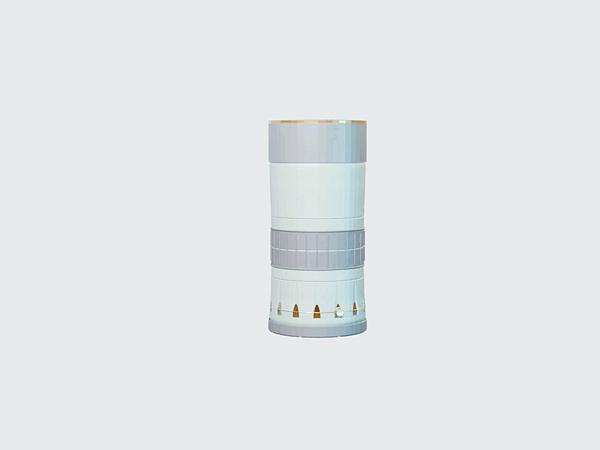
Computer-Aided Engineering (CAE) has transformed from an enterprise-level luxury into a critical growth engine for startups and expanding businesses. When developing consumer products like modern insulated tumblers, the stakes are remarkably high. Brands are no longer just selling containers; they are selling lifestyle accessories that must preserve temperatures, withstand daily abuse, and look flawless. Utilizing CAE early in the development cycle allows emerging businesses to outmaneuver larger competitors by compressing timelines, slashing prototyping costs, and engineering market-ready quality right from the first production run.
Accelerating Innovation Through Detailed 3D Design
The foundation of a successful tumbler lies in its initial digital blueprint. Traditional design methods often rely on trial-and-error physical modeling, which drains a startup’s limited budget and timeline. CAE software enables entrepreneurs to build and optimize highly detailed 3D designs in a virtual environment before a single ounce of material is purchased.
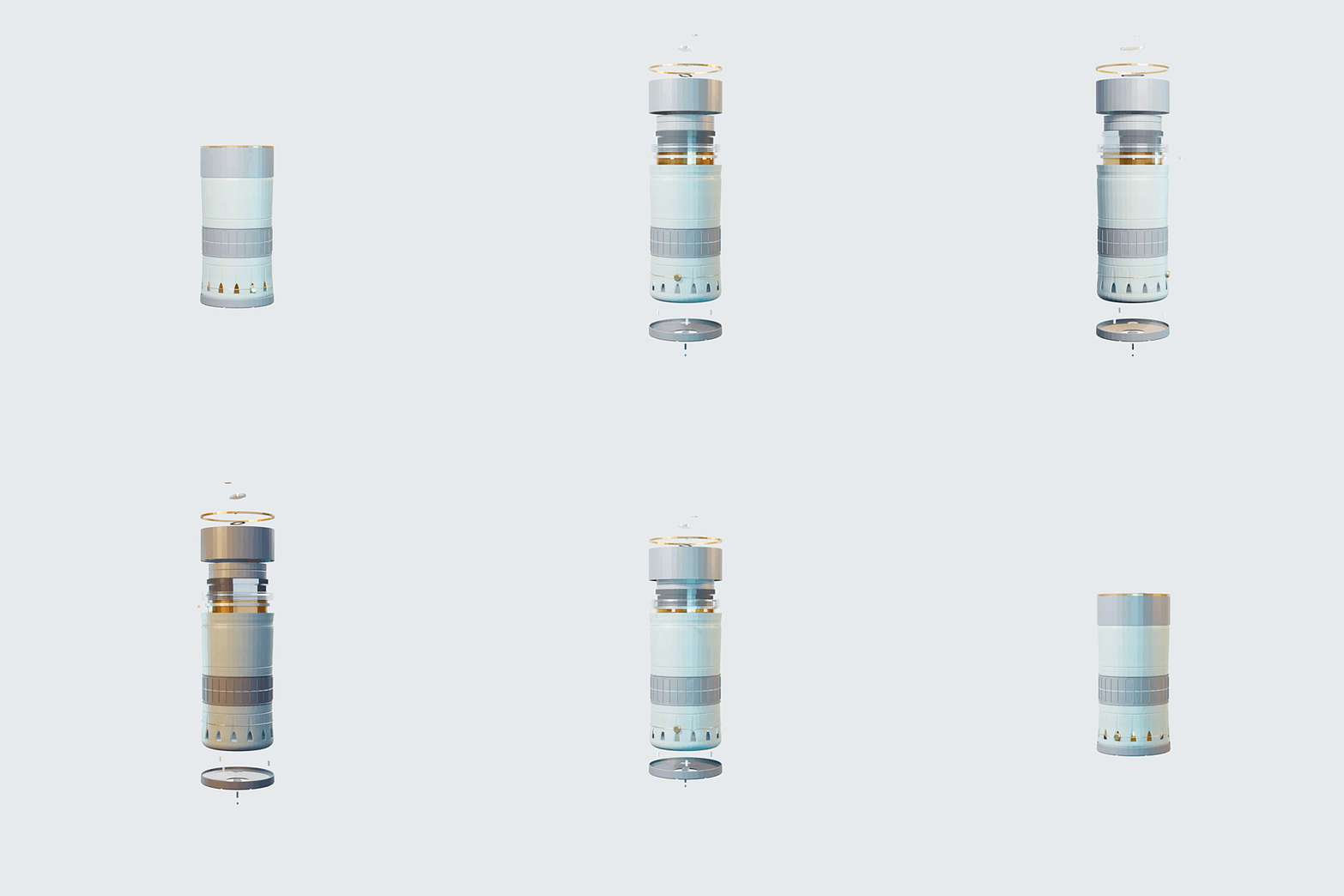
Designers can experiment with complex geometries, ergonomic grips, and innovative lid mechanisms with absolute precision. Beyond aesthetics, integrated thermal simulation allows businesses to analyze vacuum insulation performance and heat transfer pathways digitally. This ensures the tumbler meets strict temperature-retention marketing claims long before physical manufacturing begins, dramatically accelerating the time-to-market.
Guaranteeing Durability via Virtual Drop Testing
For a physical product business, a single wave of negative customer reviews regarding broken lids or dented flasks can permanently damage a brand’s reputation. Physical drop testing is traditionally destructive, expensive, and limited by the number of prototypes a business can afford to break. CAE changes this dynamic through advanced finite element analysis (FEA) to simulate real-world impacts and drop tests.
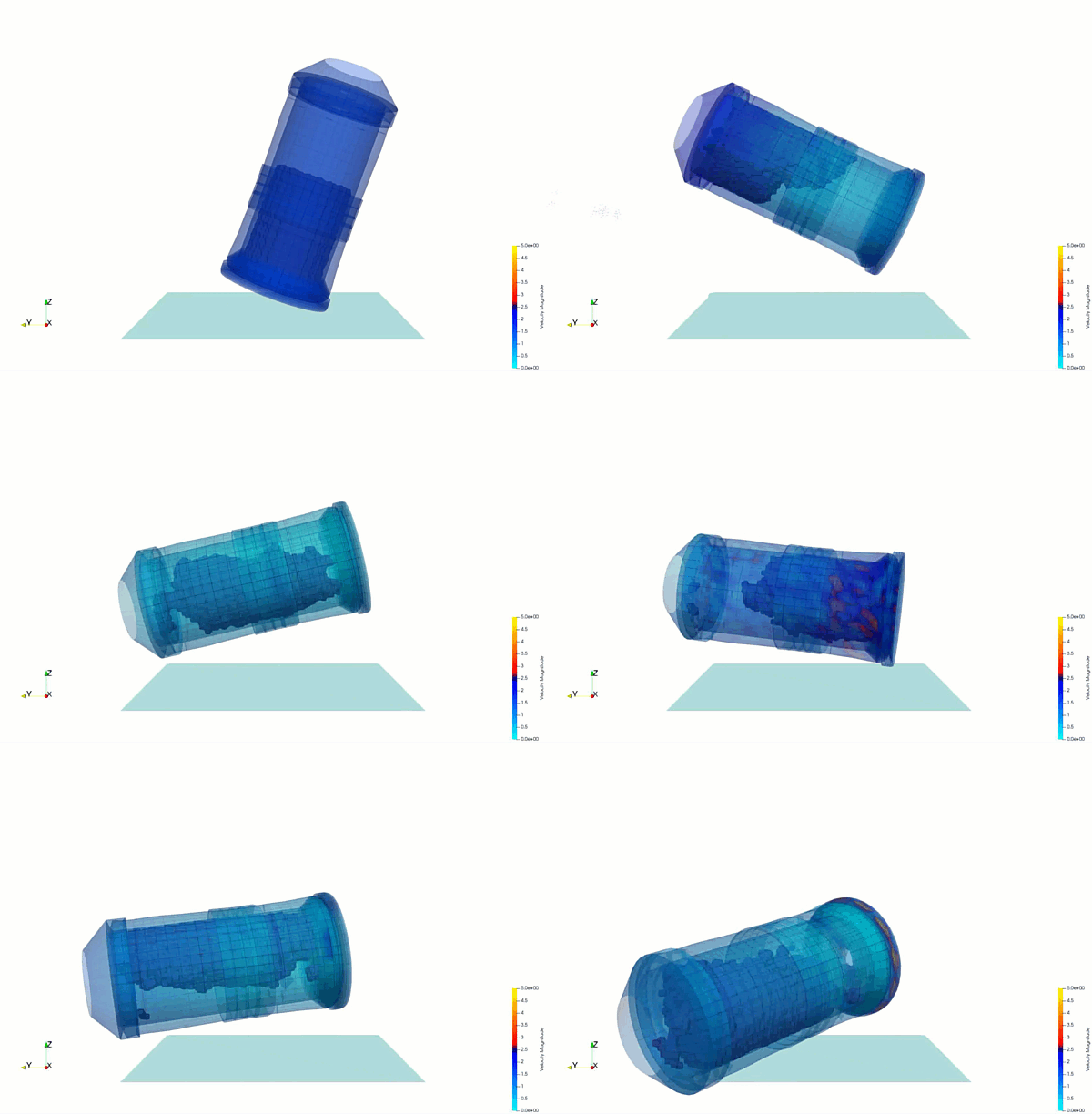
Tumbler Drop Test Simulation using OpenRadioss FEA
Startups can virtually drop their 3D tumbler designs from various heights, angles, and onto different surfaces like concrete or hardwood. The software highlights exact stress concentration points, areas prone to cracking, and potential seal failures. By identifying these structural vulnerabilities digitally, engineers can reinforce walls or alter materials immediately, guaranteeing a rugged, premium product that reduces future warranty claims and builds customer trust.
Streamlining Production with Flawless Manufacturing Documentation
The transition from a polished 3D model to a mass-produced product is where many hardware startups stumble. Miscommunications with factories often lead to tooling errors, wasted materials, and months of delays. CAE ecosystems bridge this gap by automatically converting optimized digital designs into precise, production-ready manufacturing documentation. The software generates exact geometric dimensioning and tolerancing (GD&T) blueprints, bill of materials (BOM), and injection molding simulations to predict defects like weld lines or warping. Handing a factory a comprehensive, simulation-verified technical package minimizes friction with overseas suppliers, reduces expensive mold re-tooling costs, and ensures the final manufactured tumbler perfectly matches the original design intent.
Driving Business Growth and Investor Confidence
Ultimately, embedding CAE into the product development workflow is a strategic business decision that directly impacts the bottom line. For a startup, capital efficiency is everything. By replacing multiple iterations of physical prototyping with virtual simulation, businesses save thousands of dollars in development costs and can reallocate those funds toward marketing and brand launch. Furthermore, having a robust, CAE-backed development process provides immense leverage when pitching to investors or retail buyers. Demonstrating that a tumbler’s thermal efficiency and structural integrity have been rigorously validated through engineering simulations proves to stakeholders that the business is scalable, professional, and heavily de-risked.
Author: Caesar Wiratama
Find me on Linkedin