
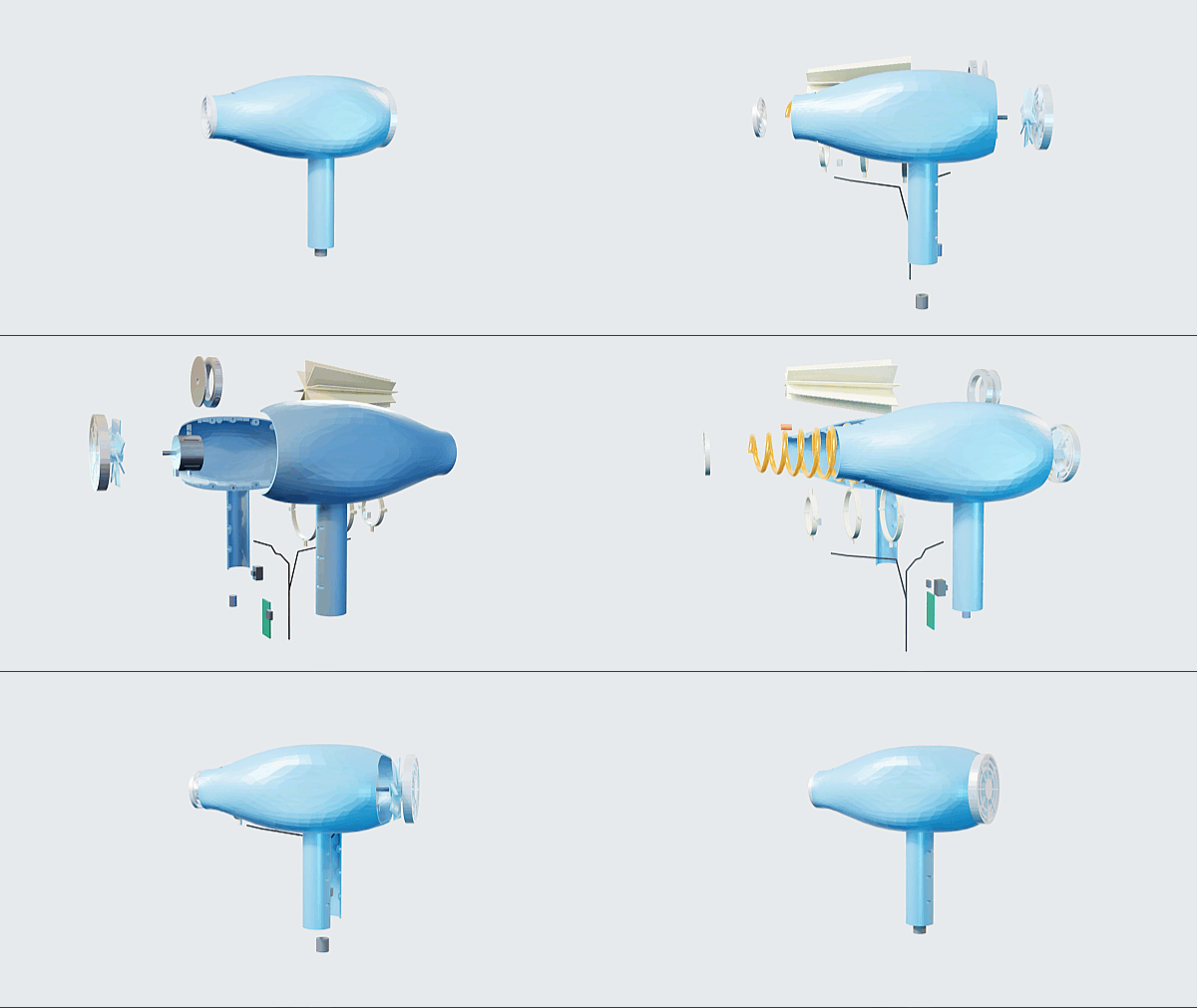
Computer-Aided Engineering (CAE) has transformed from a tool used only by large aerospace and automotive corporations into a critical asset for hardware startups. For a startup designing a consumer product like a hair dryer, engineering challenges are highly complex, involving aerodynamics, heat transfer, acoustics, and structural durability. Using CAE allows a small team to simulate and optimize these physics digitally, fundamentally altering both the product development process and the trajectory of the business.
Accelerating Product Development and Time-to-Market
In the traditional hardware development cycle, engineers rely on physical prototyping to test how a product performs. This process is slow and repetitive, requiring weeks to manufacture, assemble, and test a single iteration. For a hair dryer startup, CAE compresses this timeline by allowing engineers to test hundreds of design variations virtually. Airflow behavior, heat distribution, and fan blade efficiency can be analyzed on a computer within hours. By identifying design flaws digitally before building physical models, a startup can skip multiple rounds of physical prototyping, drastically shortening the time it takes to get the product to market.
Ensuring Safety and Enhancing Performance
A hair dryer is a high-power handheld device that combines intense heat with high-speed airflow close to a user’s head. This creates strict safety and performance requirements. Startups use Computational Fluid Dynamics (CFD)—a subset of CAE—to simulate the airflow and thermal patterns inside the device. This ensures that the heating element does not create dangerous hot spots, the external casing remains cool to the touch, and the airflow is evenly distributed for efficient drying. Additionally, acoustic simulation helps engineers modify the internal geometry to reduce turbulence, allowing the startup to design a quieter, more premium product that stands out in a crowded market.
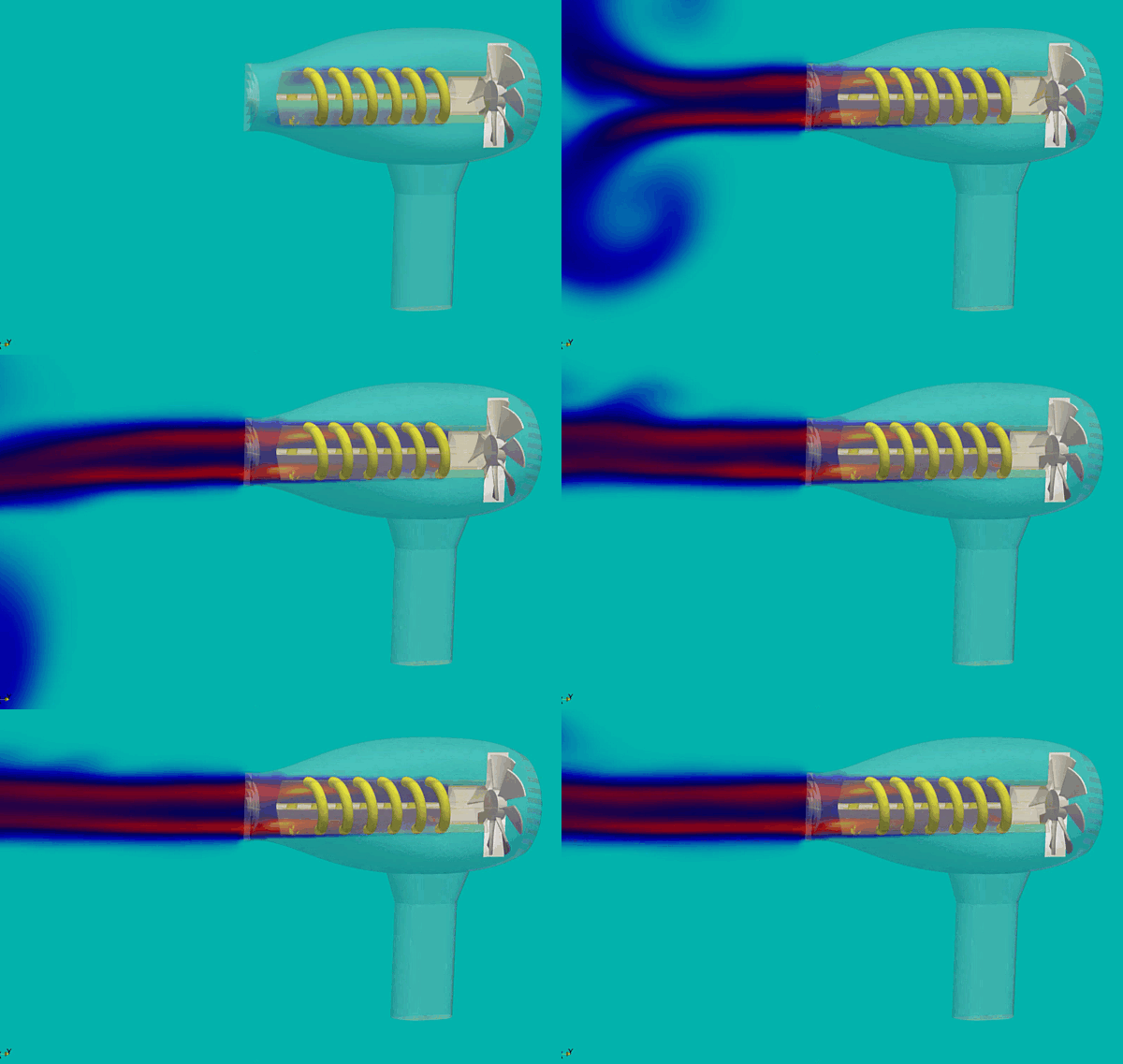
Heating and Flow Simulation of Hair Dryer using OpenFOAM CFD
Slashing Prototyping and Material Costs
Physical prototypes, injection molding tools, and laboratory testing are incredibly expensive, often draining a startup’s limited early-stage capital. CAE drastically reduces these upfront expenses. Instead of discovering that a plastic housing cracks when dropped or melts under sustained heat after investing in expensive tooling, engineers use structural mechanics simulations to predict stress points and thermal resistance. This ensures that the first physical tool created is highly likely to be the final production tool, saving tens of thousands of dollars in re-tooling costs and minimizing wasted materials.
Minimizing Product Warranty and Recall Risks
For an early-stage business, a widespread product failure or safety recall can be financially devastating and permanently ruin brand reputation. CAE helps mitigate this risk by enabling rigorous reliability testing before mass production begins. Startups can simulate drop tests from various heights, evaluate cable strain relief under continuous bending, and analyze how internal components age over thousands of hours of thermal cycles. By predicting and fixing these failure modes early, the business ensures a reliable product launch, leading to lower warranty claims and higher customer satisfaction.
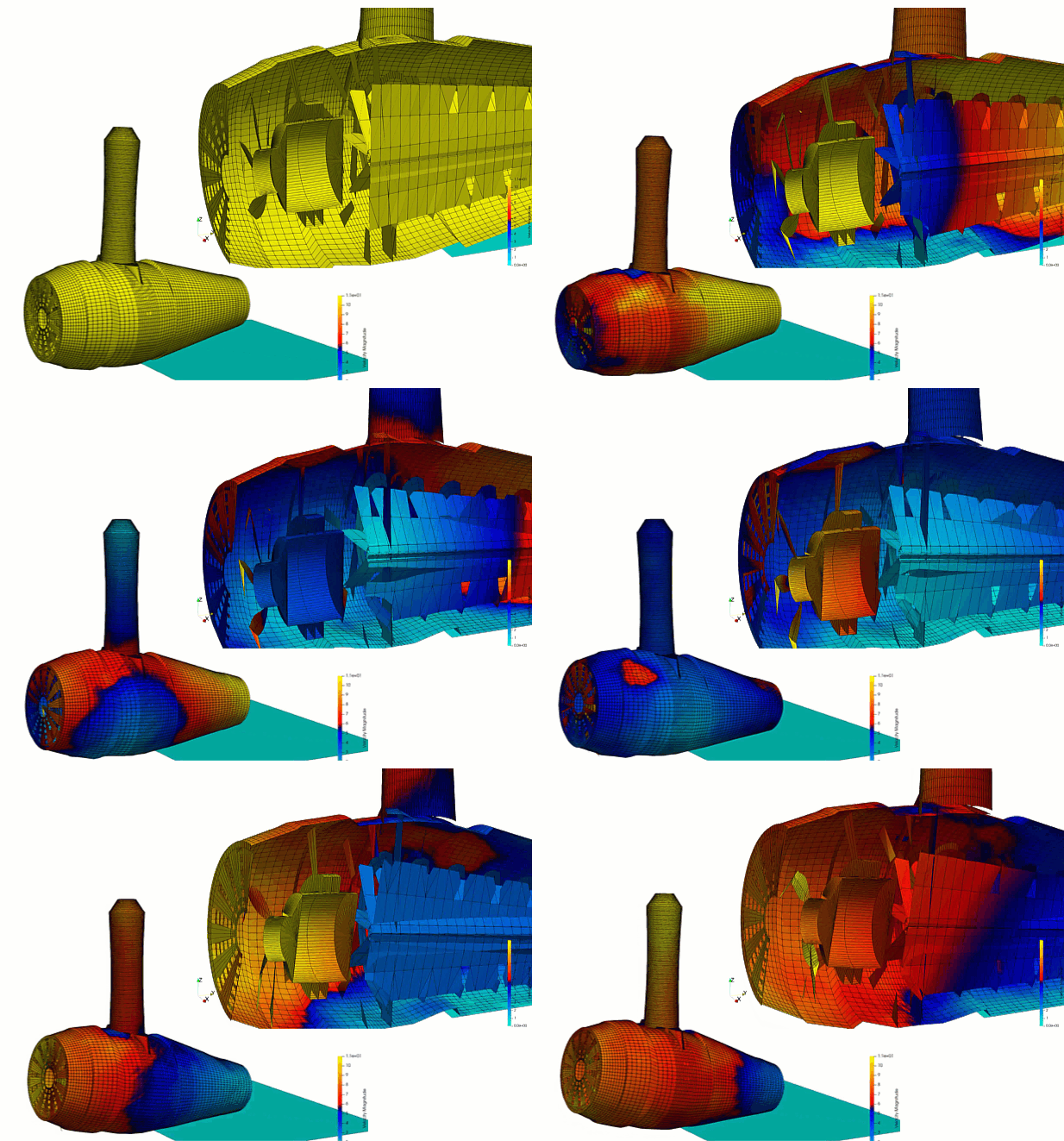
Drop Test Simulation of a Hair Dryer using OpenRadioss FEA
Boosting Investor Confidence and Business Agility
Beyond the engineering benefits, CAE acts as a powerful strategic tool for business growth. When seeking venture capital or crowdfunding, a startup that can present detailed simulation data proves to investors that its technology is viable and scientifically validated. It demonstrates operational maturity and a disciplined approach to risk management. Furthermore, the digital nature of CAE gives the business the agility to quickly pivot or customize designs based on early market feedback or regulatory changes, allowing a small company to compete effectively against established industry giants.
Author: Caesar Wiratama
Find me on Linkedin