
In the field of mechanical engineering, predicting how a component will react to real-world forces is critical to preventing catastrophic failures. Historically, evaluating these stresses meant relying on costly commercial Finite Element Analysis (FEA) software. CalculiX changes this dynamic entirely. It is a free, open-source structural simulation program capable of executing highly advanced structural, thermal, and non-linear calculations that rival industry-standard proprietary solvers.
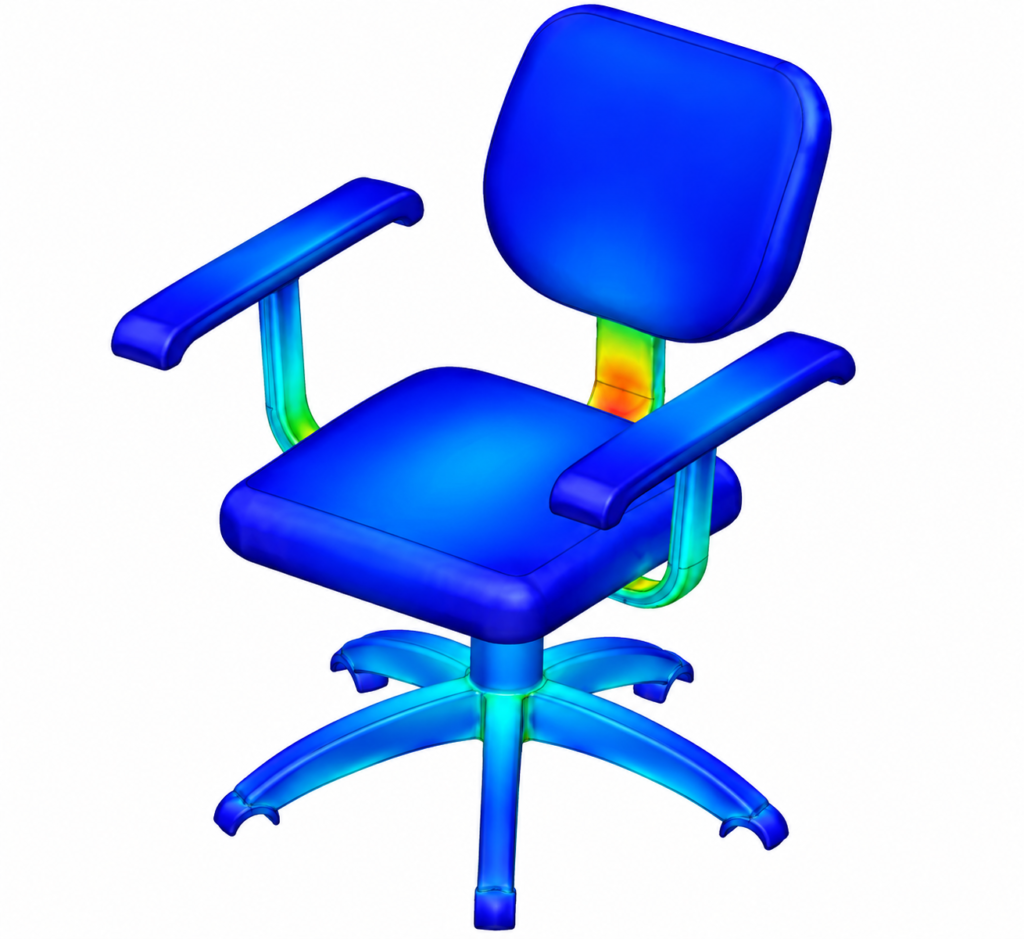
Originally developed in 1998 by Guido Dhondt and Klaus Wittig, two engineers working at MTU Aero Engines, CalculiX was built out of an industrial need for a highly capable, flexible tool. Today, it stands as one of the most reliable backbones of the open-source Computer-Aided Engineering (CAE) world, trusted by academic researchers and industrial design teams alike.
A Split Architecture: Solver and Visualizer
CalculiX is uniquely split into two distinct software programs that handle different halves of the engineering pipeline.
- The first component is CalculiX CrunchiX (
ccx), the computational solver. Written primarily in Fortran, this command-line engine reads input data, constructs complex mathematical matrices, and solves the dense equations governing stress, heat transfer, and dynamics. - The second component is CalculiX GraphiX (
cgx), the visual interface written in C. This program allows engineers to generate geometric meshes, apply boundary conditions before running the solver, and visually inspect 3D color maps of stress and deformation once the calculation is complete.
The Abaqus Structural Advantage
One of CalculiX’s most brilliant design decisions is its input syntax. The input files read by the ccx solver utilize a format that is heavily modeled after Abaqus, a leading commercial FEA software suite. This design choice dramatically lowers the barrier to adoption. Engineers already trained in top-tier commercial simulation environments can transition to CalculiX without learning an entirely new programming language. Furthermore, this structural compatibility allows teams to use CalculiX to run legacy input scripts originally written for commercial software.
Solving Beyond Simple Shapes
While many free tools are limited to simple, linear physics calculations, CalculiX shines when handling highly non-linear engineering challenges. It can calculate geometric non-linearities, such as large structural deflections where a material significantly deforms under a load. It also handles material non-linearities, including plasticity and hyperelasticity (the behavior of rubber-like materials). Crucially, CalculiX features robust contact algorithms, allowing it to accurately simulate multiple distinct parts colliding, sliding, or transferring friction against one another.
Integration in the Open-Source Space
CalculiX rarely operates in a vacuum; its open-source license makes it an ideal engine to be embedded into broader software environments. It serves as the primary simulation engine inside FreeCAD’s Finite Element Method (FEM) workbench, allowing users to model a part and stress-test it within a single program. For engineers who prefer a modern, windows-based graphical interface over the traditional command-line environment, CalculiX pairs seamlessly with PrePoMax, a user-friendly wrapper that streamlines the pre- and post-processing pipeline. Through these integrations, CalculiX continues to anchor the democratized future of advanced mechanical design.
Author: Caesar Wiratama
Find me on Linkedin
Related Search: FreeCAD Freelancing Service, code_aster Freelancing Service, Calculix Freelancing Service, OpenRadioss Freelancing Service, OpenFOAM Freelancing Service,