
LIGGGHTS is a powerful, open-source software program used to simulate the behavior of granular materials and particles. The acronym stands for LAMMPS Improved for General Granular and High Throughput Simulations. It is based on the famous LAMMPS molecular dynamics engine but is specifically tailored to handle macro-scale particles like sand, pills, coal, and agricultural grains. By using a physics method called the Discrete Element Method (DEM), it calculates the movements, collisions, and forces of millions of individual particles over time.
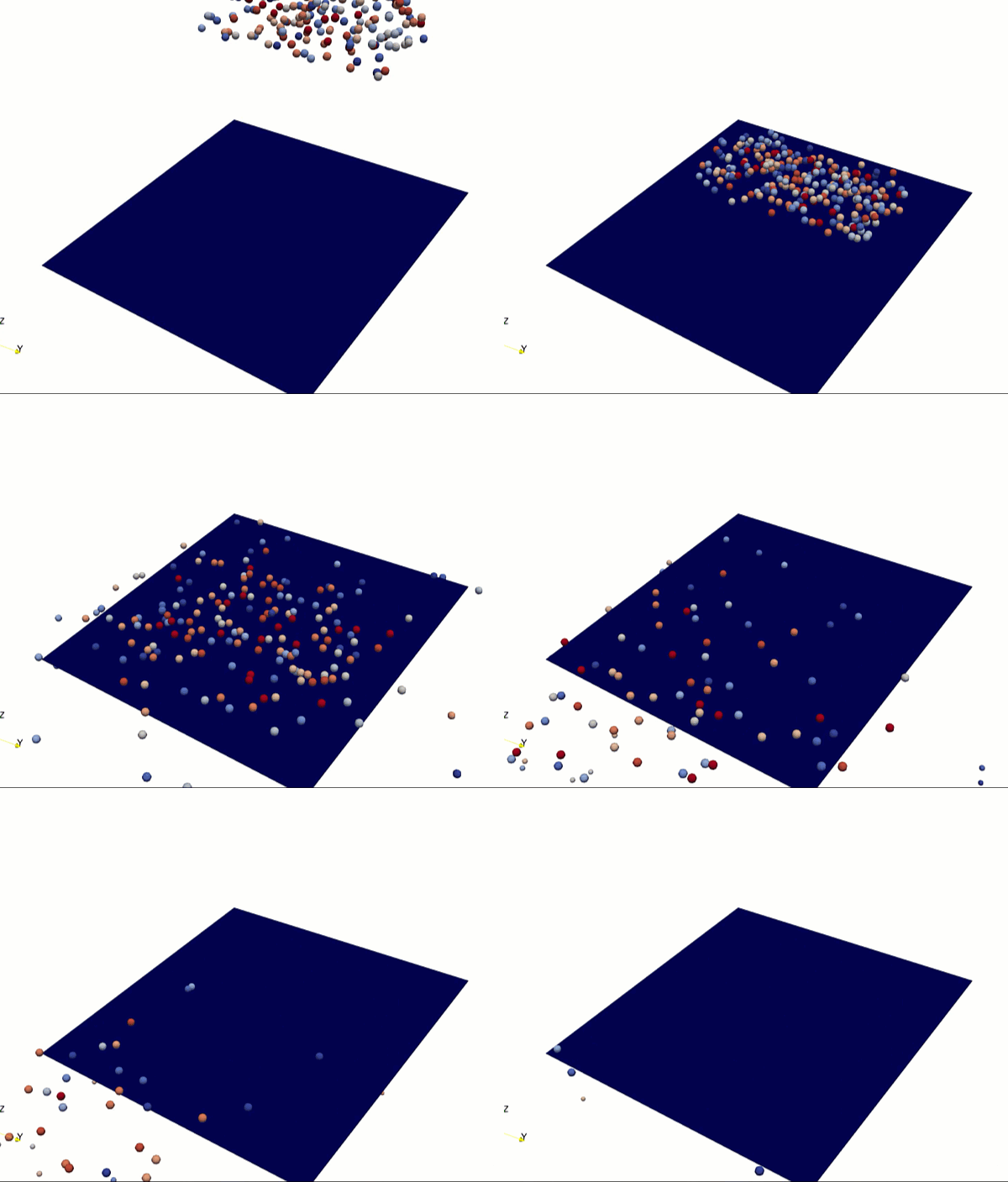
Because it is open-source, the software is entirely free to use, modify, and distribute. This accessibility has made it a favorite tool for both university researchers and industrial engineers worldwide. Instead of guessing how bulk solids will flow through a pipe or a chute, engineers use this software to visually and mathematically predict exactly how the materials will behave in the real world.
How the Software Works
At its core, the software treats every single grain or particle as an independent object. It tracks the position, velocity, and rotation of each sphere as it moves through space. When two particles collide, or when a particle hits a wall, the software applies mathematical formulas to calculate the resulting friction, bounce, and displacement. It repeats these calculations millions of times per second to create a highly accurate timeline of the material’s behavior.
Beyond basic movement, the software is highly capable of simulating complex physics. It can model how heat transfers between particles, how particles stick together due to moisture, and how different shapes and sizes mix together. It can also import complex 3D CAD models of industrial machinery, allowing users to see how material interacts with real-world equipment like conveyor belts, mixers, and hoppers.
Key Features and Strengths
One of the biggest strengths of this software is its incredible speed and efficiency. Granular simulations require massive amounts of computing power, but this program is built to scale across multiple computer processors using parallel computing. This means a simulation that would take weeks on a standard laptop can be completed in days or hours by splitting the workload across a high-performance computer cluster.
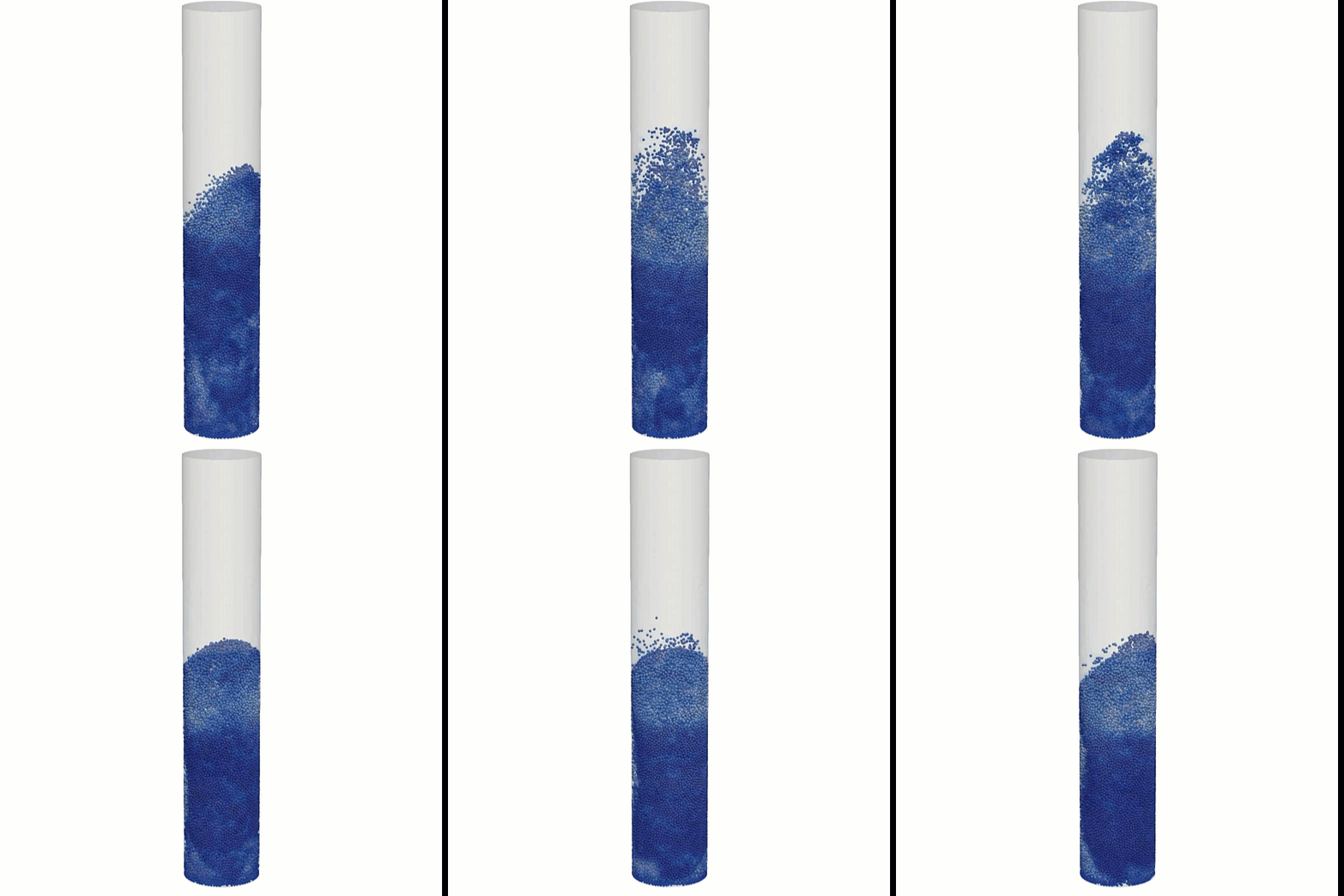
Additionally, the software is famous for its fluid coupling capabilities, often paired with OpenFOAM software. This allows users to simulate situations where both particles and fluids interact, such as sand settling in water or dust blowing through an air vent. Finally, because it outputs standard data formats, the results can be easily visualized into stunning 3D animations using free post-processing tools like ParaView.
Author: Caesar Wiratama
Find me on Linkedin