
Bringing a physical product to market is a journey of systematic risk reduction. Unlike software, where updates can be deployed instantly with a click, hardware requires dealing with the physical realities of atoms, supply chains, and manufacturing constraints. An error discovered late in the cycle can result in catastrophic financial losses and scrapped tooling. To successfully navigate this landscape, hardware creators follow a structured, multi-stage development framework. By methodically moving from a digital blueprint to a Minimum Viable Product (MVP), and finally to mass production, teams can safely scale their designs from the computer screen to thousands of store shelves.
Phase 1: Digital Prototyping and Engineering Validation (EVT)
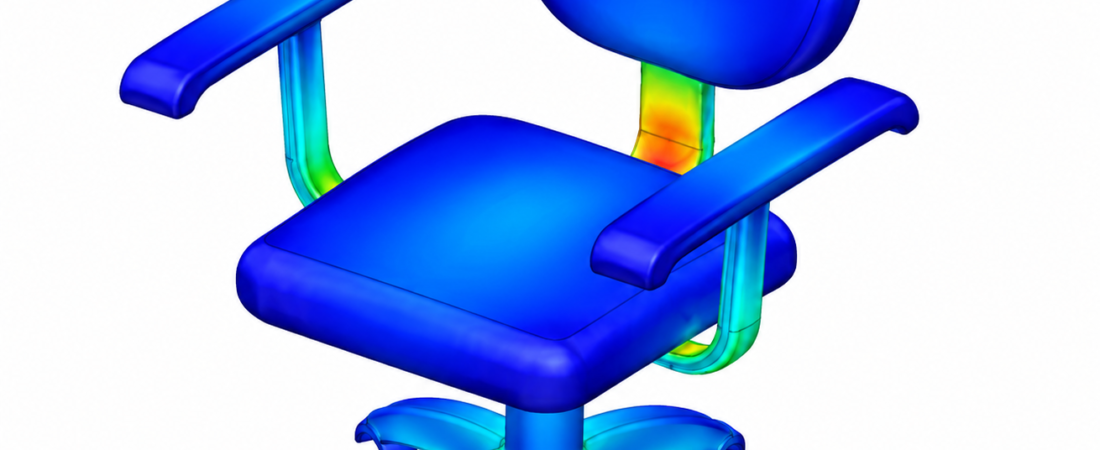
The journey begins in the digital realm with Computer-Aided Design (CAD). Here, the product’s architecture is fully defined, from the external industrial design to the internal mechanical brackets, circuit boards, and fasteners. During this phase, engineering teams leverage Computer-Aided Engineering (CAE) tools—such as Finite Element Analysis (FEA) for structural integrity and Computational Fluid Dynamics (CFD) for thermal management—to iron out critical flaws virtually.
Once the digital model is optimized, it transitions into the Engineering Validation Testing (EVT) phase. The goal of EVT is to prove that the core technology actually works. Using rapid prototyping methods like FDM 3D printing, CNC machining, and off-the-shelf development boards, engineers build “works-like” and “looks-like” prototypes. These crude, often visually unpolished models are subjected to rigorous functional, thermal, and electrical testing to ensure the fundamental engineering concepts are sound.
Phase 2: The Hardware MVP and Design Validation (DVT)
With the core engineering validated, the focus shifts to creating a Minimum Viable Product (MVP). In hardware, the MVP serves two critical audiences: the user and the manufacturer. The product must now look, feel, and function exactly like the intended final consumer item, while being designed in a way that allows it to be manufactured reliably.
This step coincides with Design Validation Testing (DVT). Here, the startup transitions away from rapid prototyping and invests in temporary or bridge tooling, such as silicone molds for urethane casting or soft aluminum injection molds. The resulting DVT units are high-fidelity MVPs. These units are deployed into the field for beta testing with real users to gather invaluable feedback. Simultaneously, they are sent to laboratories for regulatory certifications (such as FCC, CE, or UL). The DVT phase ensures that the design is completely locked, robust, and compliant before spending significant capital on permanent production tooling.
Phase 3: Production Validation (PVT) and Tooling
Once the design passes all regulatory and functional hurdles, it enters the Production Validation Testing (PVT) phase. This is the bridge to mass production. The primary objective is no longer to test the product, but rather to test the manufacturing process itself.
During PVT, the factory cuts hard steel injection molds and sets up final assembly lines, custom fixtures, and quality control jigs. The startup runs a small pilot production batch—typically a few hundred units—at standard production speeds. This phase is crucial for identifying manufacturing bottlenecks, calculating actual cycle times, and establishing the “golden unit”—the perfect reference product against which all future units will be measured. Any issues caught here are resolved by fine-tuning the machinery, adjusting molding pressures, or modifying assembly steps.
Phase 4: Mass Production (MP) and Scaling
When the pilot run achieves an acceptable yield rate (meaning the vast majority of parts come off the line without defects), the factory receives the green light for Mass Production (MP). The assembly line accelerates to full speed, and production scales into thousands or millions of units.
In this final phase, the startup’s focus transitions from engineering to supply chain management and logistics. Continuous quality control remains vital, with statistical process control used to monitor the line for any drift in component tolerances. The digital files that once lived purely as pixels on an engineer’s screen are now high-quality physical products being packaged, shipped, and delivered into the hands of customers worldwide.
Author: Caesar Wiratama
Find me on Linkedin