
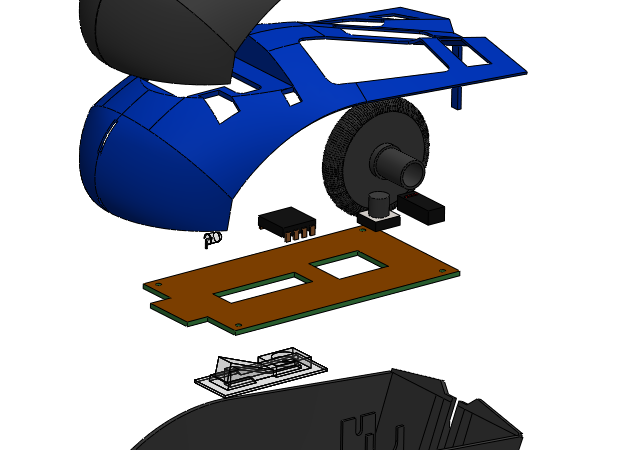
Developing a physical product is fundamentally different from building software. In software, if a bug slips into production, you deploy a patch in minutes. In hardware, if a bug slips into your injection molding tooling, it costs $50,000 and two months to fix.
For startups, the stakes are incredibly high. With limited runway and intense pressure from investors, you cannot afford the slow, sequential product development lifecycles used by legacy manufacturing giants.
To survive, hardware startups must adopt an agile, simulation-driven development process. Here is the step-by-step framework to take a physical product from a napkin sketch to the production line efficiently.
Phase 1: Ideation, Concept, and Feasibility (The Architecture)
Every great product starts with a problem. In this phase, the goal is to define the product requirements document (PRD) and explore basic engineering architecture.
- What you do: Brainstorm form factors, select core components (like sensors, batteries, or microchips), and map out the basic user experience.
- The Startup Trap: Spending months trying to make a flawless 3D CAD model before validating if the physics actually work.
- The Agile Approach: Create a crude “ugly working prototype” using off-the-shelf parts (like Arduino boards or cardboard mockups) just to prove the fundamental concept.
Phase 2: Design and Virtual Prototyping (The Digital Sandbox)
Once the architecture is set, detailed engineering begins. This is where the physical geometry of the product is designed using 3D CAD software.
- What you do: Design the enclosures, mechanisms, and printed circuit boards (PCBs).
- The Modern Advantage: This is where smart startups save thousands of dollars by utilizing Computer-Aided Engineering (CAE). Instead of immediately machining parts, you run digital stress tests.
- How to leverage simulation:
- Structural Validation (FEA): Simulate drop tests, latch mechanisms, and structural fatigue digitally.
- Thermal Management (CFD): Ensure compact electronics won’t overheat under heavy processing loads.
By fixing flaws in a virtual environment, you ensure your first physical prototype is already on version 3 or 4 chronologically.
Traditional Development:
Design ➔ Build Tooling ➔ Physical Test Fails ➔ Redesign ($$$) ➔ Delay

Agile Development:
Design ➔ Virtual Simulation ➔ Optimize CAD ➔ Build Tooling ➔ Success
Phase 3: Engineering Validation Testing (EVT)
EVT is the first time the product looks and functions like the final vision. The goal here is to prove that the design works exactly as intended under normal conditions.
- What you do: Build a small batch (usually 5 to 20 units) using rapid prototyping methods like high-fidelity 3D printing, silicone molding, or soft-tooling.
- The Goal: Test core functionality, battery life, basic environmental ruggedness, and initial firmware integration.
Phase 4: Design Validation Testing (DVT)
In DVT, you test the product in the environment it will actually live in. More importantly, these units must be built using the intended mass-production processes (e.g., actual injection molded plastics, not 3D prints).
- What you do: Put the product through rigorous environmental and regulatory testing (like FCC, CE, or UL certifications). Run automated stress rigs to flip hinges thousands of times or bake components in thermal chambers.
- The Crucial Check: This phase locks in the design. Any changes after DVT become exponentially expensive because hard tooling has already been cut.
Phase 5: Production Validation Testing (PVT) & Scale
PVT is not about testing the product; it is about testing the assembly line. You are optimizing for yield—ensuring the factory can build 1,000 units with minimal defects.
- What you do: Design assembly fixtures, train factory operators, and establish Quality Assurance (QA) metrics.
- The Goal: Slowly ramp up manufacturing speeds until the factory achieves a stable, repeatable, and profitable “Golden Unit.”
Summary: The Golden Rule for Startup Hardware
The secret to successful physical product development isn’t avoiding failure—it is shifting failure as far left in the timeline as possible. By combining rapid physical prototyping with robust virtual engineering simulation early on, hardware startups can preserve their burn rate, satisfy investors, and launch reliable products on schedule.
Author: Caesar Wiratama
Find me on Linkedin