
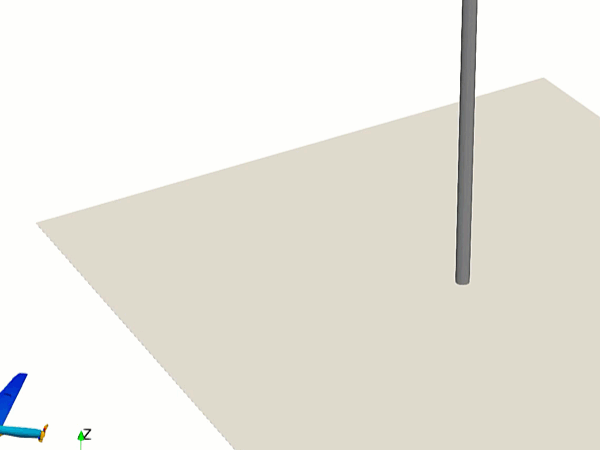
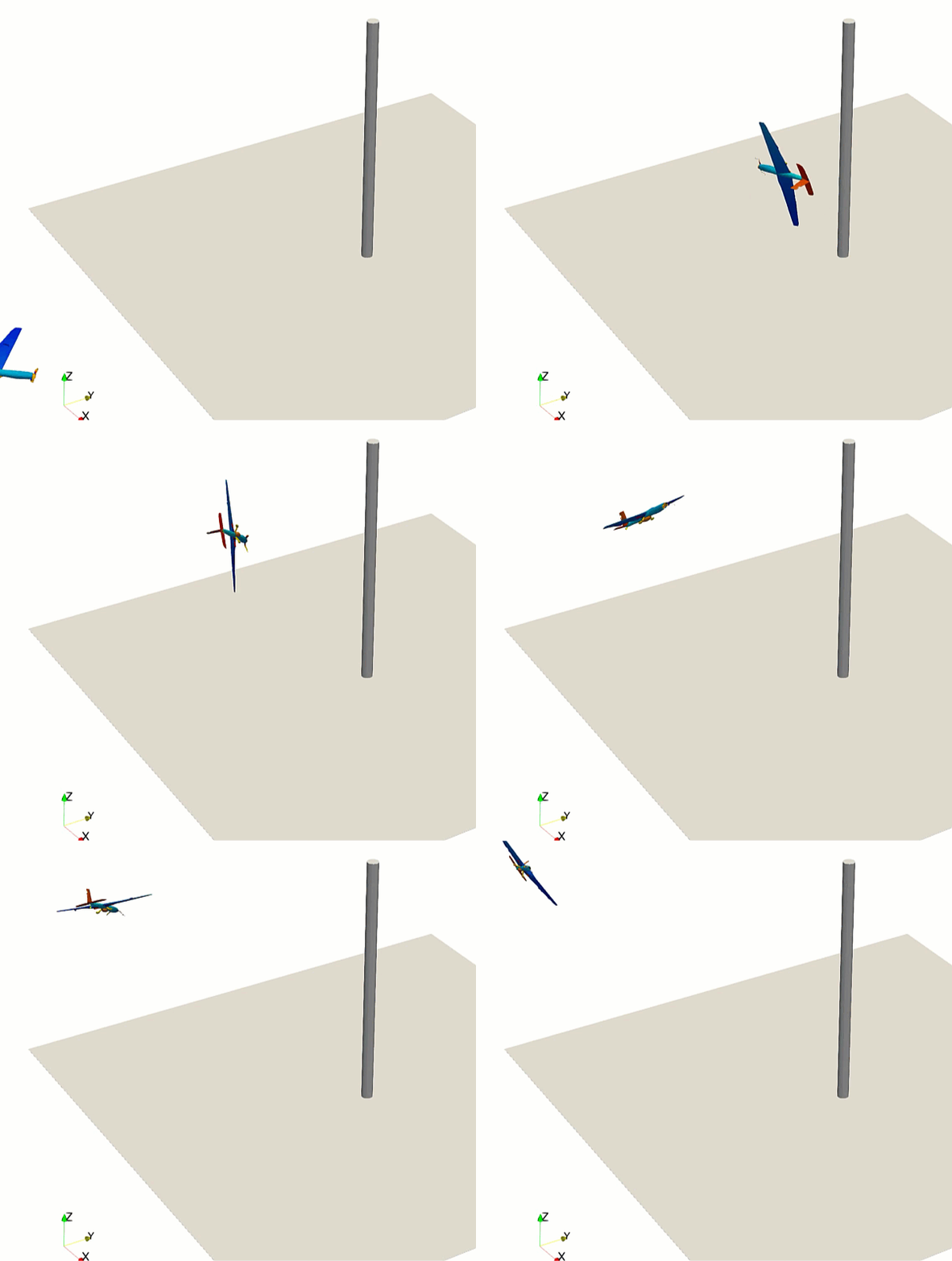
Explicit Finite Element Analysis (FEA) simulation is transforming how aerospace companies design and manufacture fixed-wing Unmanned Aerial Vehicles (UAVs). In the past, engineering teams relied heavily on physical crash testing and iterative prototyping to evaluate drone durability. This traditional approach often resulted in skyrocketing development costs and lengthy delays. By integrating explicit FEA simulation into the early stages of product design, businesses can mathematically replicate high-speed impacts and structural failures in a virtual environment. This shift not only optimizes the physical performance of the aircraft but also radically improves the core business processes driving product development.
Accelerating Time-to-Market
One of the most significant business advantages of explicit FEA simulation is the drastic reduction in development cycles. Designing a fixed-wing UAV requires balancing aerodynamic efficiency with structural resilience. When engineers rely solely on physical testing, every major structural failure requires rebuilding the prototype from scratch, stalling the timeline. Explicit FEA allows design teams to run hundreds of virtual crash scenarios—such as hard landings, bird strikes, or mid-air collisions—in a fraction of the time. Because engineers can identify and resolve weak points digitally, the company can bypass multiple physical prototyping phases, allowing them to launch competitive products ahead of schedule.
Drastic Reductions in R&D Expenditures
Physical crash testing is an expensive endeavor that requires specialized testing facilities, data acquisition equipment, and sacrificial aircraft components. When a physical prototype crashes, the financial investment in those materials and sensors is permanently lost. Explicit FEA simulation shifts these costs from destructive physical testing to digital computation. While specialized software and hardware require an initial investment, they eliminate the recurring costs of manufacturing failed prototypes. Businesses can save thousands of dollars per design cycle, allowing them to reallocate their research and development budgets toward innovation, sensor integration, or software features rather than rebuilding broken wings.
Mitigating Risks and Enhancing Safety Compliance
A major bottleneck in the UAV industry is securing regulatory approvals from aviation authorities, which demand strict proof of operational safety and structural integrity. Failing a regulatory compliance test late in the development cycle can be financially devastating for a business. Explicit FEA provides granular, highly precise data on how specific materials behave under extreme stress and impact forces. By using these simulations to prove the drone’s crashworthiness and structural predictability, companies can generate comprehensive compliance documentation before the physical aircraft is even built. This proactive risk management minimizes the likelihood of costly regulatory rejections and product recalls.
Unleashing Material Innovation and Optimization
Fixed-wing UAVs demand lightweight materials like carbon fiber composites, specialized plastics, and advanced alloys to maximize flight time and payload capacity. However, these materials behave unpredictably during high-velocity impacts. Explicit FEA gives designers the freedom to experiment with complex material layups and internal geometric structures without any physical risk. Engineers can systematically test how shifting a internal rib or changing a composite layer affects impact absorption. This level of virtual experimentation empowers businesses to confidently deliver highly optimized, lighter, and more durable UAVs that outperform competitors in both battery life and structural ruggedness.
Author: Caesar Wiratama
Find me on Linkedin