
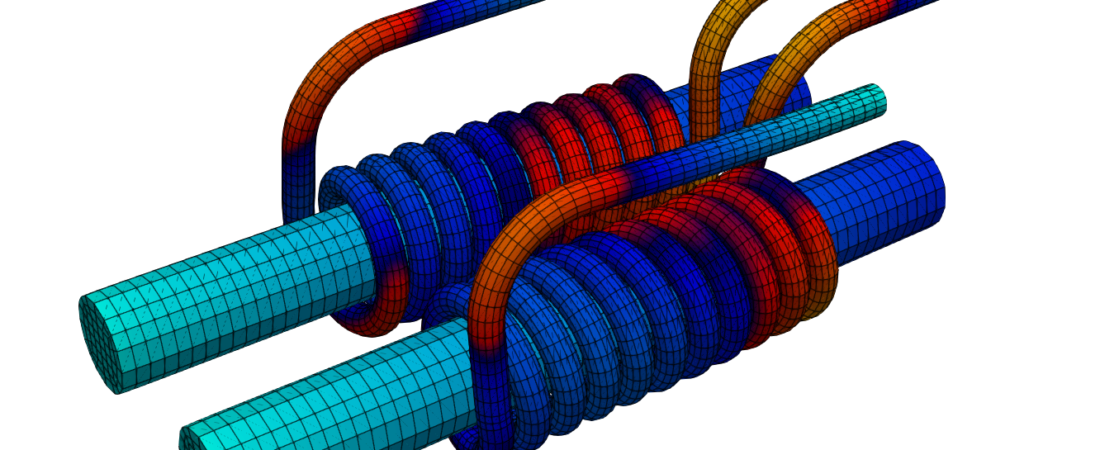
While Computational Fluid Dynamics (CFD) ensures that a cooling coil can successfully remove heat, it does not show how that heat physically deforms the metal over time. Finite Element Analysis (FEA) combined with CFD temperature inputs bridges this gap through a process known as thermal-structural coupling. By importing precise temperature maps from a CFD simulation directly into an FEA model, engineers can visualize exactly how thermal expansion puts physical stress on the cooling coil and surrounding charging head plastics.
This combined simulation allows design teams to predict mechanical failures long before hardware is built. Fast-charging heads undergo rapid thermal cycling, swinging from ambient outdoor temperatures to extreme heat within minutes as high-current charging begins. Importing CFD data into FEA enables engineers to see where different materials expand at uneven rates, allowing them to fix potential structural cracks, seal failures, or warped components entirely in software.
Predicting Fatigue Life and Preventing Field Failures
For an electric vehicle infrastructure business, warranty claims and field maintenance are massive profit killers. Charging cables and heads are dropped onto concrete, run over by vehicles, and yanked by users, all while operating under high thermal loads. FEA simulation uses thermal data to calculate fatigue life, simulating thousands of hot-and-cold operational cycles combined with mechanical impacts.
By analyzing the combined effects of thermal stress and physical abuse, engineers can pinpoint exactly where the cooling coil might develop micro-cracks or pinhole leaks after years of service. Catching these structural vulnerabilities during the design phase prevents catastrophic coolant leaks in the field. This drastically lowers long-term warranty liabilities, reduces emergency maintenance dispatch costs, and protects the network operator’s brand reputation.
Accelerating Certification and Compliance Timeline
Before a liquid-cooled fast charger can be deployed commercially, it must pass rigorous international safety and durability standards, such as UL or CE certifications. These tests often involve destructive structural testing and extreme thermal stress trials. Coupled CFD-FEA simulations accurately mimic official certification tests, giving companies high confidence that their product will pass on the first attempt.
If a design fails a physical compliance test, the company must restart the engineering loop, delaying product launch by months and costing thousands in re-testing fees. Using digital simulation to pre-verify that the coil and charging head housing can survive specified drop tests and thermal shocks allows businesses to bypass regulatory bottlenecks. This ensures a predictable, rapid pathway to mass production and commercial distribution.
Optimizing Material Selection for Lighter, Cheaper Products
Selecting the right materials for a charging head requires balancing thermal conductivity, mechanical strength, and cost. Without accurate coupled simulation data, manufacturers often rely on overly expensive, heavy copper alloys or over-designed structural reinforcement to ensure safety. FEA driven by CFD inputs reveals the exact stress margins throughout the assembly, showing precisely where material can be safely thinned out or substituted.
Engineers can use these insights to replace heavy metal structural parts with lighter, high-performance engineering plastics, or optimize the thickness of the cooling coil itself. Reducing weight without sacrificing structural integrity makes the charging gun significantly lighter and more user-friendly for consumers. Concurrently, reducing raw material volume lowers the per-unit manufacturing cost, drastically improving the company’s gross margins during high-volume production.
Author: Caesar Wiratama
Find me on Linkedin