
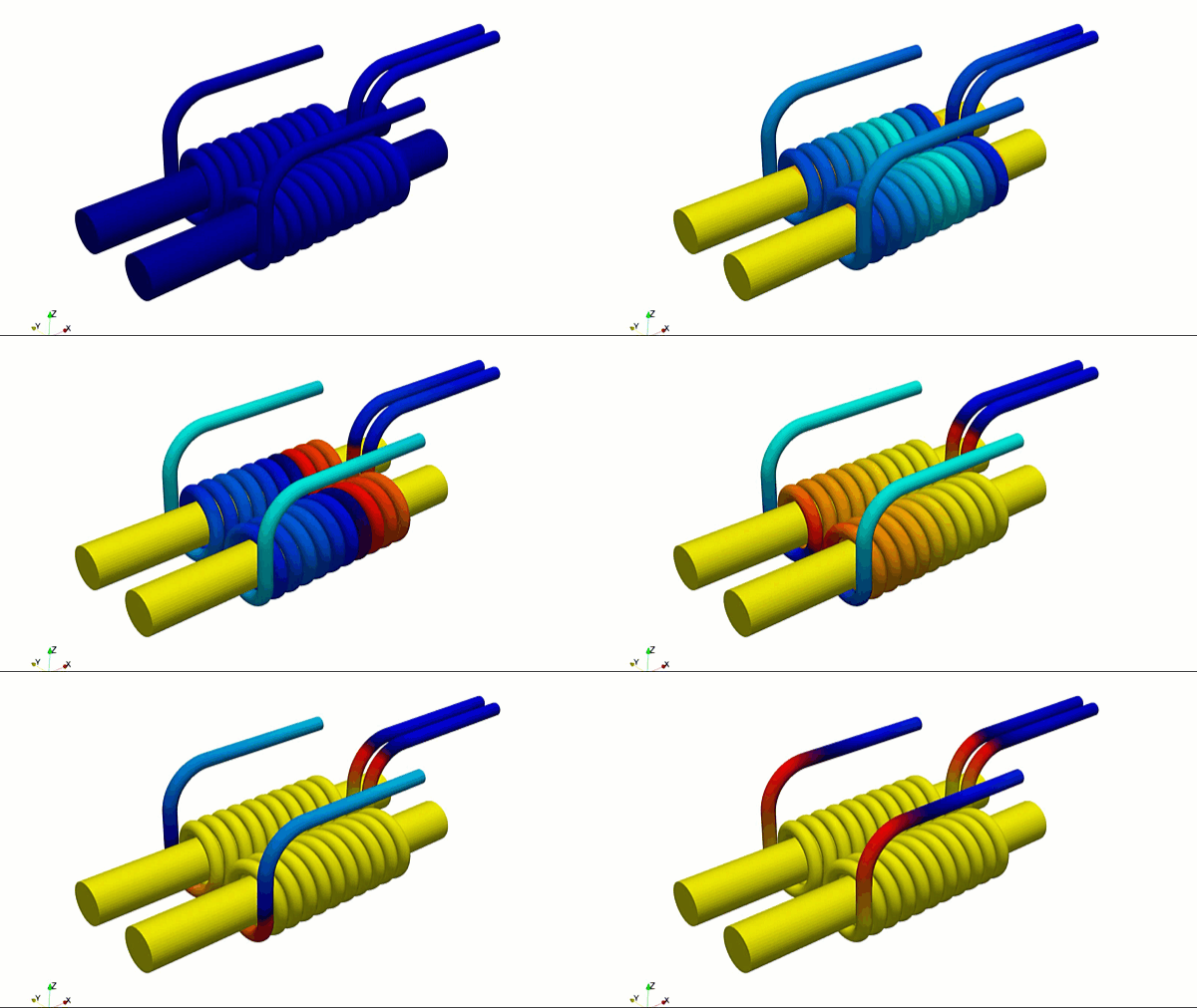
Computational Fluid Dynamics (CFD) simulation transforms how engineers design the cooling coils inside an electric vehicle charging head. In traditional workflows, creating a custom cooling loop requires building physical models, machining intricate copper or aluminum channels, and testing them in a thermal lab. CFD simulation replaces this physical trial-and-error by allowing engineers to model fluid behavior, heat transfer, and pressure drops virtually.
Using simulation software, design teams can test dozens of coil geometries in a fraction of the time it takes to build a single physical prototype. Engineers can instantly alter variables like coil diameter, wall thickness, and fin configurations to see how they impact thermal dissipation. This digital agility allows companies to compress their engineering cycles from months to weeks, enabling them to finalize high-performance designs at an unprecedented pace.
Minimizing Pressure Drop and Flow Stagnation
A major engineering challenge in charging head design is balancing heat extraction with the pressure required to pump the coolant. If a cooling coil has too many sharp bends or narrow passages, fluid resistance increases, requiring a larger, more expensive pump inside the charging station. CFD analysis provides precise visual maps of fluid velocity and pressure distribution throughout the internal channels of the charging head.
Simulation highlights problem areas such as recirculation zones, where coolant becomes trapped and boils, or high-friction areas that trigger severe pressure drops. By visualizing these micro-level fluid dynamics, engineers can smooth out internal curves and optimize flow pathways to keep the coolant moving efficiently. This ensures maximum heat transfer with minimal pumping effort, leading to a more reliable and energy-efficient charging system.
Reducing Physical Prototyping and Material Costs
From a financial perspective, relying on physical prototypes to perfect a cooling coil is incredibly expensive. Specialized tooling, high-grade alloys, and laboratory testing time carry substantial overhead. CFD simulation radically lowers development costs by shifting the testing phase into a risk-free virtual environment.
Instead of manufacturing five different physical iterations of a coil to find the one that works best, engineers use CFD to narrow down the options to a single, mathematically verified design. Physical manufacturing is reserved only for the final validation stage. This drastic reduction in scrap material, machining time, and lab resources directly protects the company’s bottom line and frees up capital for other innovation areas.
Eliminating Over-Engineering for Lower Unit Costs
Without simulation data, engineers often over-engineer components out of caution to ensure they do not fail in the field. This usually means using excessively thick copper, oversized cooling jackets, or overly complex internal structures, all of which drive up the weight and production cost of the charging head. CFD provides exact data on thermal margins, showing engineers precisely where material can be safely reduced.
By understanding the exact thermal load at every millimeter of the contact interface, manufacturers can optimize the coil design to use the minimum amount of material necessary while still exceeding safety standards. Lowering the raw material weight per unit makes the charging head lighter and more ergonomic for consumers, while simultaneously driving down the mass-production costs to improve profit margins.
Author: Caesar Wiratama
Find me on Linkedin