
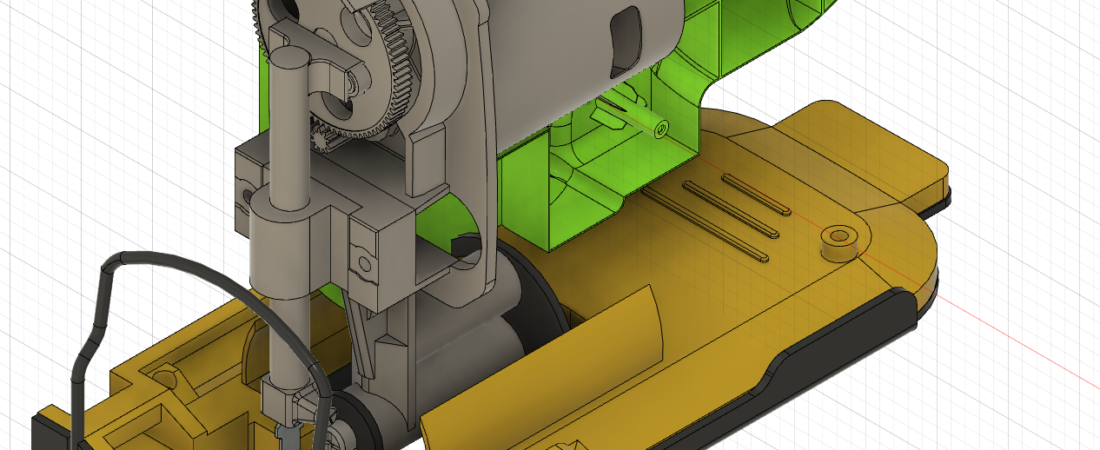
Developing a new hardware product has historically been a lengthy, capital-intensive venture fraught with high risks. Traditional manufacturing cycles required months of preparation, heavy upfront investment in tooling, and rigid processes that left little room for error. The advent of rapid prototyping has fundamentally shifted this landscape by allowing engineers and designers to quickly fabricate physical models directly from digital designs using technologies like 3D printing, CNC machining, and laser cutting. By bridging the gap between a digital concept and a physical object in a matter of days rather than months, rapid prototyping provides an agile framework for development that transforms how physical products are brought to life.
Accelerating Business Growth for Hardware Startups
For hardware startups, speed and capital efficiency are the ultimate determinants of survival. Rapid prototyping serves as a vital business catalyst by drastically reducing the time-to-market and lowering overall development costs. Instead of sinking limited capital into permanent molds or expensive production runs before verifying a design, startups can utilize low-cost physical models to validate their assumptions early. This fail-fast approach helps mitigate downstream manufacturing risks and prevents disastrous post-launch product failures. Furthermore, having a functional, high-quality prototype early in the cycle increases investor readiness, giving venture capitalists and stakeholders a tangible proof-of-concept that accelerates funding rounds and secures market confidence.
Executing Efficient Design Iterations
The heart of successful hardware engineering lies in the continuous loop of testing, evaluating, and refining a design. Design iteration with rapid prototyping follows a structured cycle where a 3D Computer-Aided Design (CAD) model is produced, quickly fabricated, and subjected to functional tests. Engineers can evaluate form, fit, and operational mechanics in real-world scenarios, identifying geometric conflicts or ergonomic flaws immediately. The insights gained from these physical evaluations are funneled right back into the CAD software to tweak the design, initiating the next cycle. This tight feedback loop empowers hardware teams to test multiple configurations concurrently, optimizing features based on physical data and accelerating the path to a production-ready model.
Supercharging the Iteration Loop with CAE
While physical prototyping is indispensable, relying solely on physical models can become expensive and time-consuming when assessing complex physics like structural stress, thermal management, or fluid dynamics. This is where Computer-Aided Engineering (CAE) becomes a game-changer for the design iteration process. By leveraging digital simulation methods such as Finite Element Analysis (FEA) and Computational Fluid Dynamics (CFD), engineering teams can subject their CAD models to rigorous virtual stress tests before ever spending resources on physical fabrication. CAE allows startups to safely explore diverse design alternatives, isolate weak points, predict component fatigue, and optimize material choices in a purely digital environment. Blending CAE with physical prototyping minimizes the number of physical builds required, ensuring that when a prototype is finally manufactured, it is already highly optimized for real-world performance.
Streamlining Design and Simulation with Tensor
Navigating the complexities of advanced CAD modeling and high-fidelity CAE simulations can be overwhelming for a lean startup lacking in-house specialization or expensive software licenses. The engineering experts at PT Tensor bridge this technical gap by delivering comprehensive, licensed CAE and mechanical design services tailored specifically for growing businesses. With extensive experience spanning industrial design, 3D CAD modeling, and precision FEA and CFD simulation, their team handles everything from initial concept drafting to advanced pre-production validation. By partnering with PT Tensor, hardware startup owners gain access to specialized engineering infrastructure and expertise, allowing them to confidently eliminate design flaws, reduce overhead costs, and fast-track their innovations straight to production.
Author: Caesar Wiratama
Find me on Linkedin