
In the world of structural engineering, the stakes are rarely higher than in the design and maintenance of nuclear power plants. When analyzing critical infrastructure against earthquakes, intense thermal stress, and structural aging, there is zero margin for error. Historically, executing such high-stakes simulations required proprietary software backed by massive corporate infrastructure. Code_Aster broke this convention, providing the global engineering community with a completely free, open-source Finite Element Analysis (FEA) solver engineered to meet strict nuclear safety regulations.
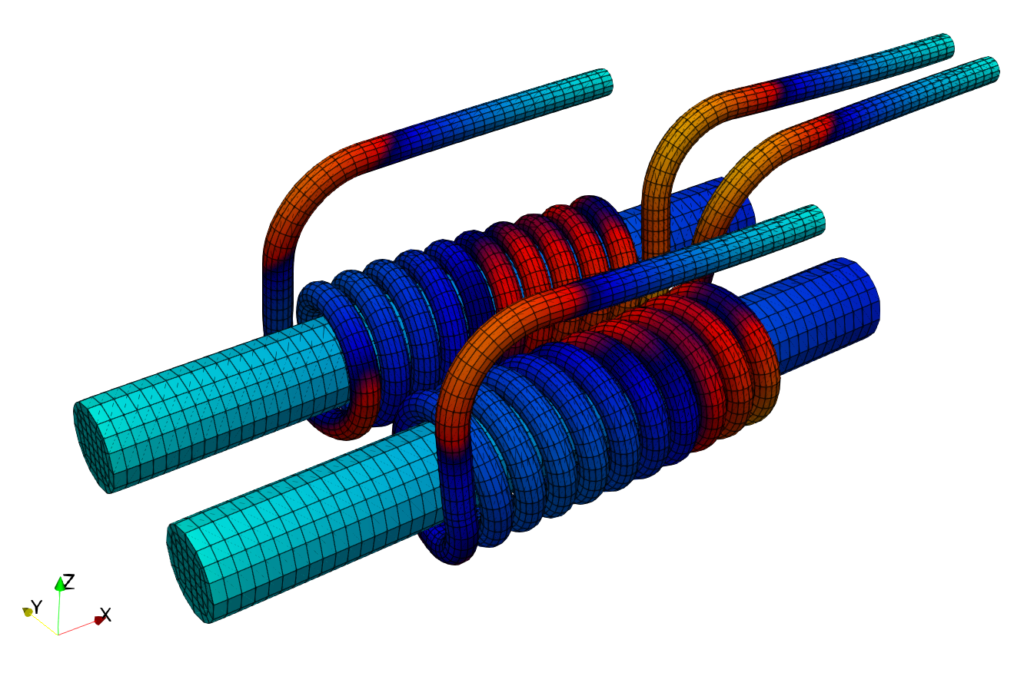
The acronym stands for Analyses des Structures et Thermomécanique pour des Études et des Recherches (Structural Analysis and Thermomechanics for Studies and Research). Developed natively by the Research and Development wing of Électricité de France (EDF)—one of the largest electricity suppliers in Europe—the code began its life in 1989. In 2001, EDF made the strategic decision to release Code_Aster to the public under an open-source GNU General Public License. This transformed an in-house corporate safeguard into a foundational pillar of global open-source Computer-Aided Engineering (CAE).
The Industrial Rigor of Continuous Quality Control
What sets Code_Aster completely apart from many other open-source or academic software initiatives is its absolute emphasis on industrial verification and validation. Because EDF relies on this software to justify the structural integrity and extended lifespans of nuclear reactors to government regulatory bodies, the software is subject to stringent quality control guidelines. The repository features a massive verification matrix exceeding 4,000 automated industrial test cases. Every code update is systematically benchmarked against real-world experimental data and exact analytical math equations, ensuring that the software delivers uncompromised reliability.
A Multiphysics Powerhouse for Deep Structural Analysis
While standard commercial FEA packages charge hefty premiums for advanced structural modules, Code_Aster includes a comprehensive physics suite directly in its core engine. It goes well beyond simple, linear static stress calculations. The solver natively supports:
- Advanced Geotechnical Engineering: Simulating how soils, concrete dams, and foundations shift and fatigue over time.
- Dynamic Seismology: Calculating how massive concrete structures and piping networks behave when subjected to localized earthquake vibrations.
- Fracture Mechanics and Fatigue: Predicting exactly when, where, and how a crack will propagate through high-pressure steel pipes or structural components.
- Coupled Multiphysics: Blending thermo-hydro-mechanical equations to model structural changes caused by combined heat, liquid pressure, and mechanical load.
With over 200 built-in constitutive material laws and 400 finite element types, it handles plastic deformation, metallic creep, metallurgy, and welding simulations with extreme fidelity.
Parallel Computing for Massive Datasets
Industrial scale requires massive processing capacity. Code_Aster features a deeply integrated, fully distributed parallel computing mode utilizing High-Performance Computing (HPC) frameworks. Rather than hitting a processing ceiling, the solver effortlessly scales complex computations across massive computer clusters. It is optimized to tackle highly dense simulations featuring over 10 million Degrees of Freedom (DoFs). Because it is open source, engineering departments can spin up hundreds of parallel processors in cloud environments to resolve massive equations overnight, all without paying a single cent in per-core software licensing fees.
The Salome-Meca Unified Ecosystem
By itself, Code_Aster functions purely as a computational solver, operating via command-line text executions and Python scripts. To make it accessible to everyday designers, EDF packages the solver inside a comprehensive visual suite called Salome-Meca. Salome-Meca bundles the solver alongside advanced 3D CAD modeling modules, meshing engines, and an intuitive graphical user interface known as AsterStudy. This visual workspace allows engineers to comfortably import geometries, assign complex material constraints, run calculations, and export data back out to visualization tools like ParaView, establishing Code_Aster as a definitive centerpiece for heavy industrial design.
Author: Caesar Wiratama
Find me on Linkedin
Related Search: FreeCAD Freelancing Service, code_aster Freelancing Service, Calculix Freelancing Service, OpenRadioss Freelancing Service, OpenFOAM Freelancing Service,