
Manufacturing Design Service
Tensor En is present as a strategic partner providing professional Manufacturing Design Services, widely known through the Design for Manufacturing and Assembly (DFMA) approach. In today’s competitive industrial era, creating an innovative product concept is only half the long journey toward market success. The true and greatest challenge lies in how to transform that visual idea or initial prototype into a product that can be mass-produced efficiently, at a low cost, and with fast turnaround times, without sacrificing its quality and functionality. Many companies suffer heavy losses because their product designs are too complex to manufacture on the factory line, triggering high reject rates, raw material waste, and bloated tooling costs. This is where our engineering team steps in to bridge the gap between creative concepts on paper and mechanical realities on the production floor.
As a comprehensive engineering solutions provider, Tensor En relies on its experience since 2013 in transforming various product blueprints into real manufacturing ecosystems. Our team of experts has successfully assisted industry players across various sectors in designing automotive components, consumer electronic devices, medical equipment, and large-scale industrial machinery structures. More than a decade of experience gives us a deep understanding of the mechanical limitations of each production method, ranging from plastic injection molding, die casting, sheet metal forming, and precision machining (CNC milling & turning) to additive manufacturing or 3D printing technologies. We do not just create neat-looking technical drawings; instead, we optimize every curve, wall thickness, dimensional tolerance, and draft angle to ensure your design is ready for mass production with the highest level of economic and technical efficiency.
Legal compliance and the utilization of the latest technology are the foundations of the working standards at Tensor En. We guarantee that the entire workflow—from design and 3D CAD modeling to the compilation of manufacturing working documents—is carried out using officially licensed software from global design technology developers. The use of legal software is crucial in the manufacturing world to guarantee seamless data interoperability without file corruption when transferred to automated production machinery in factories, such as CNC machines or assembly line automation systems. Furthermore, backed by an official software ecosystem, our team has access to the most advanced manufacturing simulation modules—such as mold flow analysis or sheet metal forming simulation—allowing us to detect and fix potential manufacturing defects (like sink marks, warpage, or cracks) directly inside the computer before expensive physical molds are ever built.
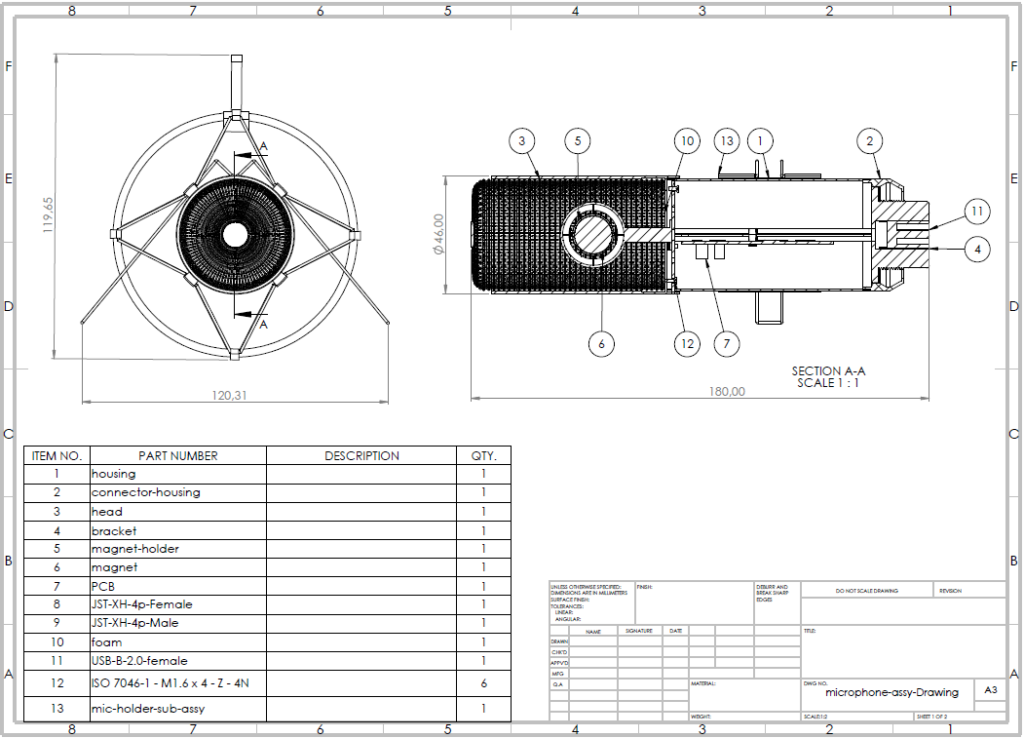
The design workflow methodology at Tensor En adopts strict international manufacturing engineering standards (such as ISO standards and ASME Y14.5 for Geometric Dimensioning and Tolerancing / GD&T). We begin our process by critically analyzing the functionality of your product to identify which areas can be simplified. We apply component consolidation principles, minimizing the number of separate parts in a product assembly to slash assembly time and reduce the need for fasteners like bolts or rivets. Next, we establish rational dimensional tolerances; overly tight tolerances on non-functional areas only increase machining costs drastically without adding value to product performance. The deliverable documents we hand over consist of detailed manufacturing drawings (2D working drawings), mature 3D model files, a structured Bill of Materials (BOM), and clear assembly step guidelines for your factory operators.