
Designing an efficient water atomizer for garden sprinklers requires a deep understanding of fluid behavior. Startups and established engineering companies face the challenge of balancing water pressure, droplet size distribution, and spray coverage to create a high-performance product. Historically, this involved repetitive cycles of building and testing physical prototypes, which consumed significant time and capital. Today, Computational Fluid Dynamics (CFD) serves as a virtual laboratory, allowing engineers to simulate, analyze, and perfect atomizer designs before manufacturing a single physical component.
The Technical Mechanics of CFD in Atomizer Design
At its core, water atomization is the process of breaking a continuous liquid stream into fine droplets. In a garden sprinkler, this is typically achieved through pressure swirl nozzles, impingement designs, or internal mixing chambers. CFD helps engineers analyze this transformation by solving the Navier-Stokes equations, which govern fluid flow. By utilizing multi-phase flow models, specifically the Volume of Fluid (VOF) method or Eulerian-Lagrangian tracking, engineers can simulate the exact point where water interacts with air.
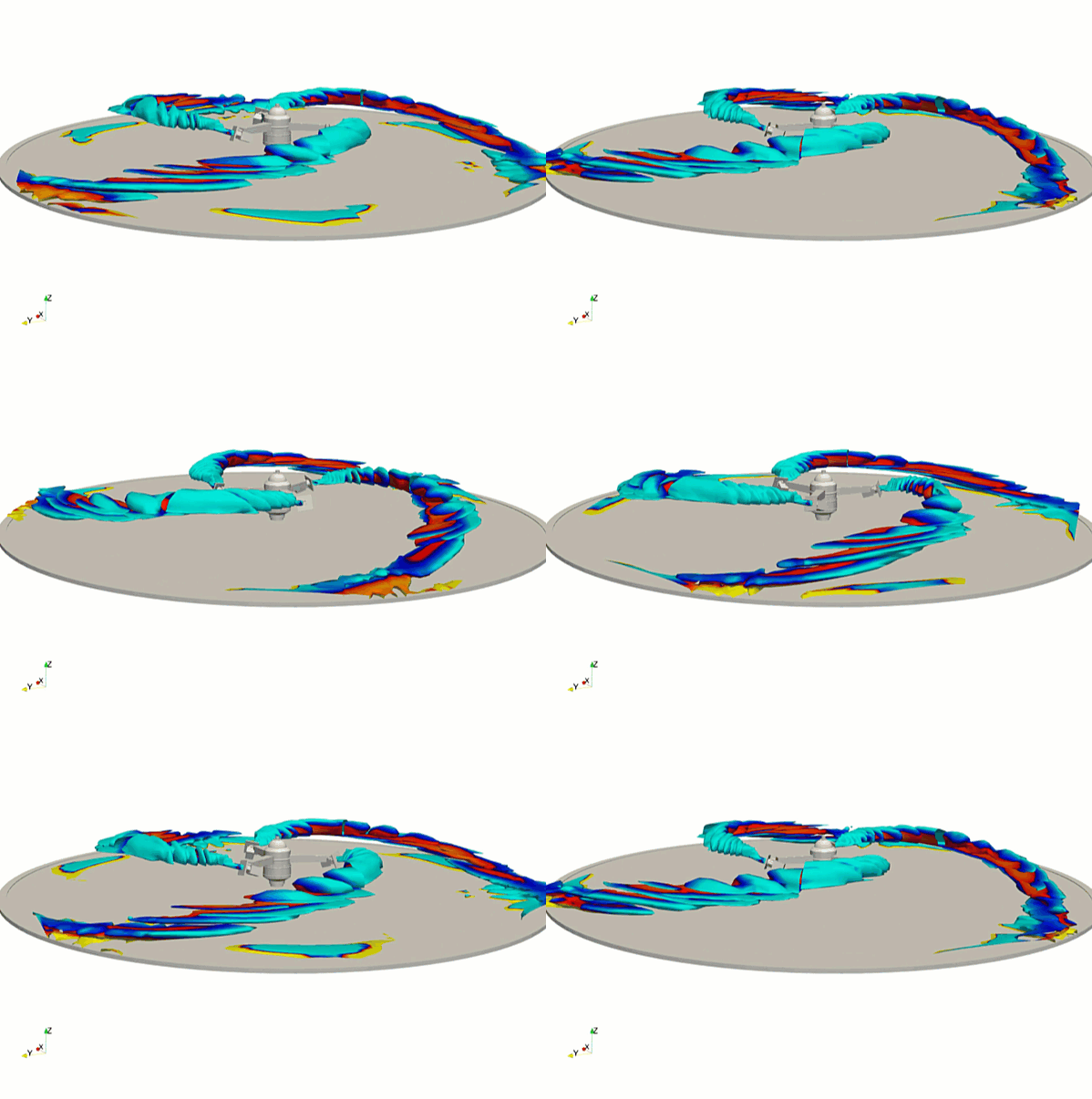
CFD software tracks critical variables such as velocity vectors, pressure drops, and shear stresses within the nozzle internal geometry. It allows designers to observe how geometric modifications—like altering the swirl chamber’s angle or the discharge orifice’s diameter—affect the spray angle and droplet size distribution. Engineers can also simulate external aerodynamics to predict how wind or ambient air resistance will influence the trajectory and evaporation of the water droplets. This precise technical data ensures the sprinkler delivers uniform coverage without generating droplets so fine that they drift away, or so large that they damage delicate plants.
Accelerating the Business Process and Reducing Time-to-Market
Integrating CFD into the product development cycle fundamentally changes the business economics for hardware startups and agile companies. Traditional research and development heavily rely on trial-and-error prototyping, which incurs high costs for CNC machining, injection molding, and laboratory testing equipment. When a prototype fails to meet specifications, the entire cycle must repeat, delaying market entry.
CFD shifts the bulk of this experimentation into a digital environment. A design engineering team can test dozens of geometric variations simultaneously using parallel computing. This virtual validation drastically reduces the number of physical prototype iterations needed, often cutting R&D timelines by months. Consequently, companies save thousands of dollars in material costs and tool modifications. Bringing a product to market faster allows startups to secure market share early, capitalize on seasonal demand, and allocate their financial resources toward scaling manufacturing and marketing efforts.
Accelerating Innovation with Tensor En as Your RnD Extension
Developing in-house CFD capabilities requires expensive software licenses, high-performance computing hardware, and specialized engineers who understand complex fluid physics. For many growing companies, maintaining these resources full-time is cost-prohibitive. Tensor En, a team of experienced CFD freelancers operating since 2013, solves this bottleneck by serving as a seamless “RnD Extension” for your engineering team. By partnering with Tensor En, your company gains immediate access to over a decade of specialized fluid simulation expertise without the overhead of an in-house simulation department. Tensor En integrates directly with your core designers, translating your performance goals into precise computational models, validating your fluid dynamics, and delivering actionable geometric optimizations. This collaborative approach empowers your team to deliver high-efficiency garden sprinklers to the market reliably, cost-effectively, and with scientifically proven performance.
Author: Caesar Wiratama
Find me on Linkedin