
Computer-Aided Engineering (CAE) has transformed how modern electronics enclosures are developed, turning hardware design from a game of trial and error into a precise science. In the past, companies relied heavily on building multiple physical prototypes, testing them until they failed, and then starting the design process over again. This traditional workflow is notoriously slow and expensive. By integrating CAE tools—including Computer-Aided Design (CAD), Computational Fluid Dynamics (CFD), and Finite Element Analysis (FEA)—into the early stages of development, businesses can simulate real-world conditions virtually. This shift allows engineering teams to identify design flaws, optimize material selection, and verify performance metrics before a single piece of hardware is ever manufactured.
For startups and established enterprises alike, this virtual testing ground fundamentally changes the business dynamics of product development. Instead of spending months waiting for machined parts or injection molds to be fabricated, engineers can iterate rapidly in a software environment. They can test how a casing behaves when dropped, how heat moves away from critical chips, and how minor structural changes affect the overall weight and cost of the product. By replacing physical guesswork with digital accuracy, CAE streamlines the entire engineering pipeline, allowing companies to focus their resources on innovation rather than troubleshooting.
Accelerating Time-to-Market and Cutting Costs
The most immediate business impact of utilizing CAE tools is a drastic reduction in development lifecycles and prototyping expenses. For startups, speed to market can mean the difference between securing a market foothold or losing out to competitors. CAD software provides the foundational geometry that allows seamless collaboration between industrial designers and electrical engineers, ensuring that printed circuit boards (PCBs) fit perfectly within their housings. When this geometry is passed directly into simulation software, the need for dozens of physical prototype iterations disappears. Eliminating even two or three rounds of physical prototyping can save a company tens of thousands of dollars in tooling modifications and manufacturing delays.
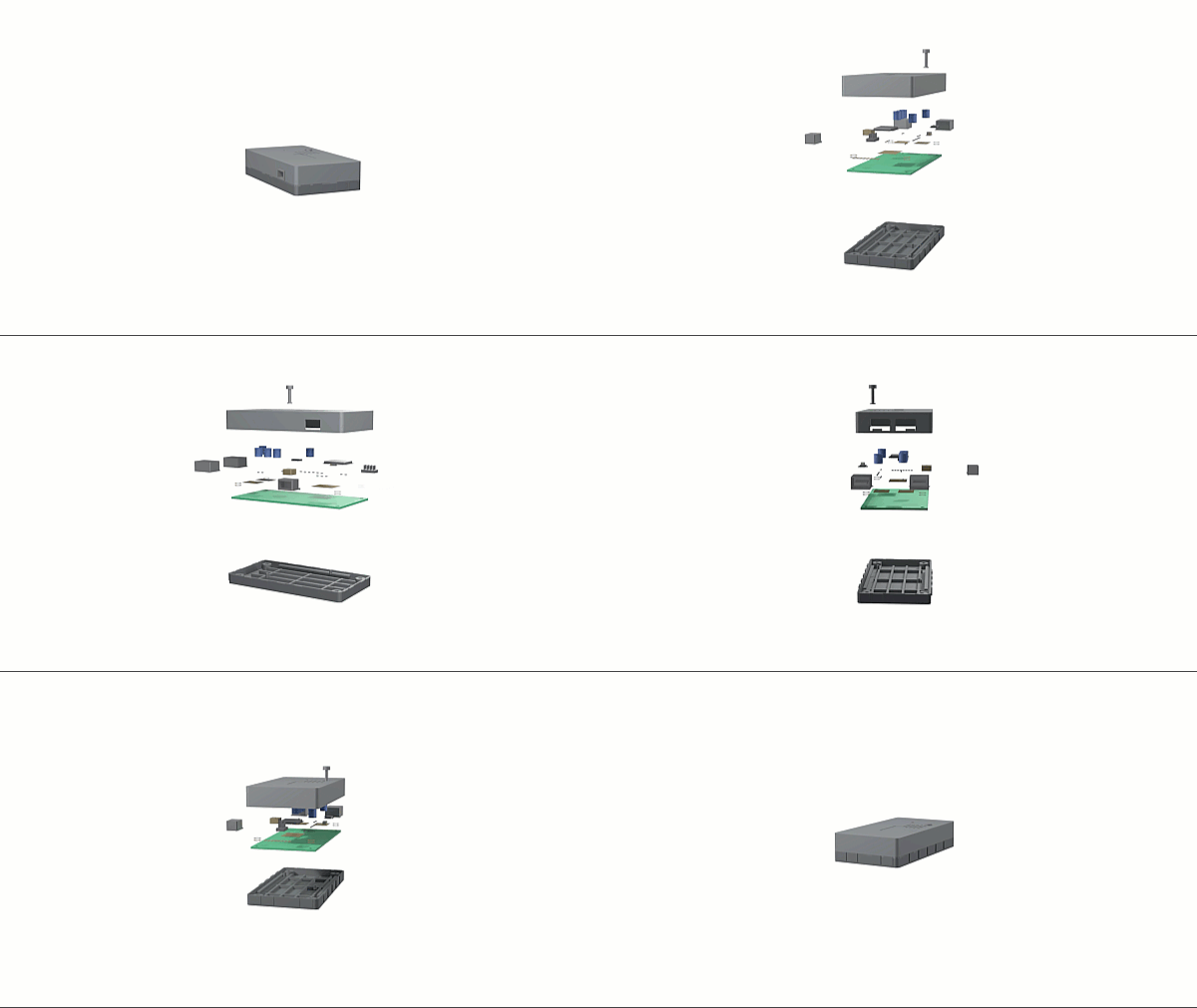
Furthermore, minimizing physical iterations mitigates the risk of discovering catastrophic flaws late in the production cycle. Discovering that an enclosure cracks under stress or causes a component to overheat after ordering expensive injection molds is a financial nightmare for any business. Virtual testing catches these issues when they are still cheap to fix—on the computer screen. This predictability allows companies to confidently set aggressive launch timelines, coordinate marketing campaigns, and secure manufacturing capacity without the fear of sudden, costly delays holding up the product release.
Optimizing Thermal Performance with CFD Cooling Analysis
As electronic components become smaller and more powerful, managing thermal energy has become one of the greatest challenges in enclosure design. High temperatures degrade component lifespan, reduce processing efficiency, and can even cause total system failure. Computational Fluid Dynamics (CFD) serves as an essential tool for thermal management, allowing engineers to visualize airflow, analyze heat dissipation, and predict temperature distributions throughout the enclosure. By simulating how heat moves through conduction, convection, and radiation, designers can optimize the placement of heatsinks, ventilation slots, and cooling fans long before any physical assembly takes place.
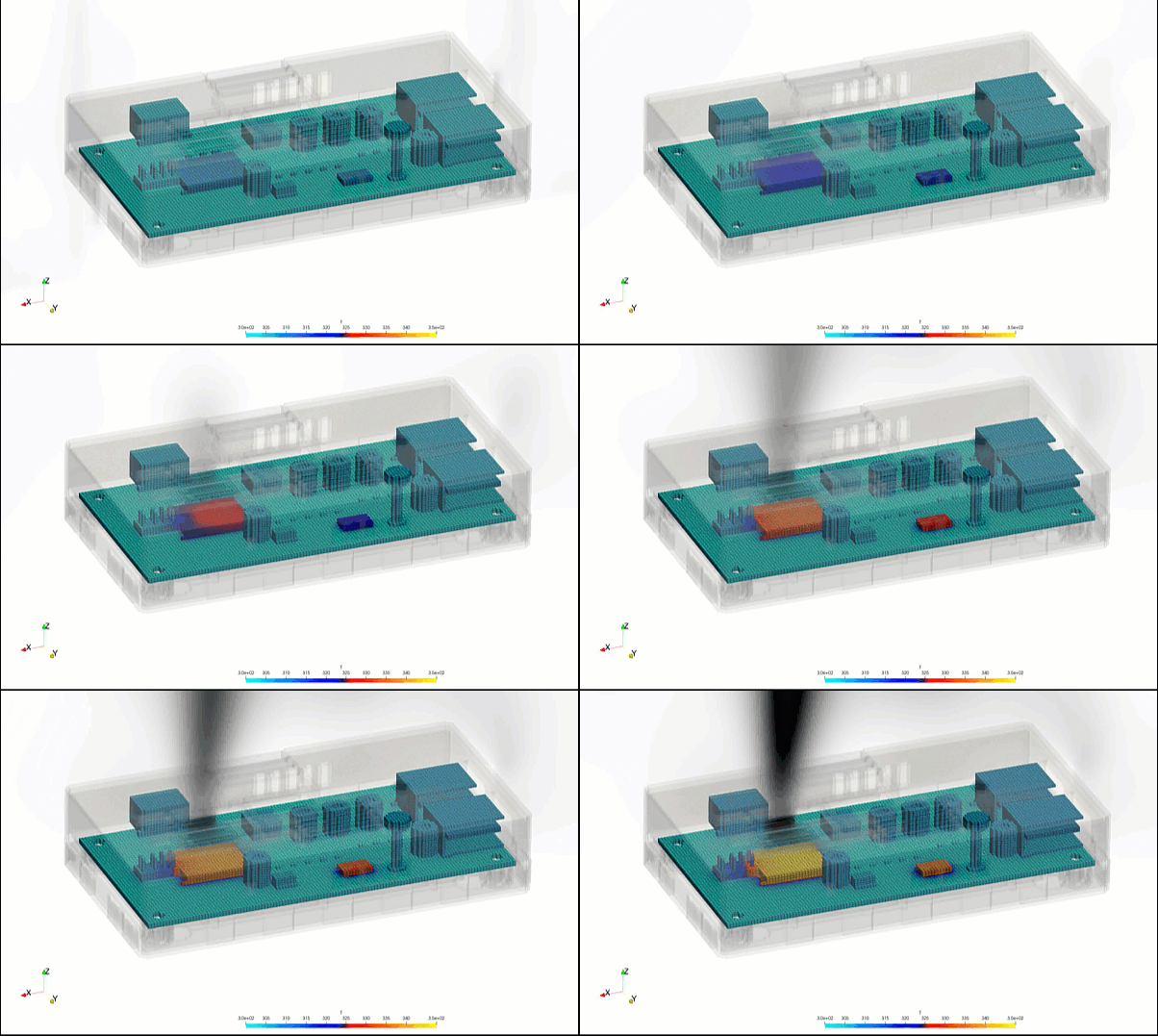
Through precise CFD modeling, businesses can avoid the common pitfall of over-engineering their cooling systems. Instead of adding large, noisy fans or excessively heavy copper heatsinks “just to be safe,” engineers can use simulation data to find the exact balance required for stable operation. This optimization directly influences the final product’s form factor, battery consumption, and acoustic profile. For the business, a well-cooled product means fewer warranty claims, higher reliability in the field, and a better overall user experience, all of which strengthen the brand’s reputation and long-term profitability.
Ensuring Structural Integrity with FEA Drop Testing
Electronics enclosures are inherently subjected to harsh physical environments, from the daily wear and tear of consumer use to accidental drops on concrete surfaces. Ensuring that a device can withstand these impacts without internal or external damage is critical. Finite Element Analysis (FEA) allows engineers to perform virtual drop tests and structural stress assessments by breaking down the enclosure into millions of smaller elements to calculate how forces distribute during an impact. This simulation reveals exactly where the housing might crack, where latches might fail, and how shock waves propagate through the structure to threaten sensitive internal electronics.
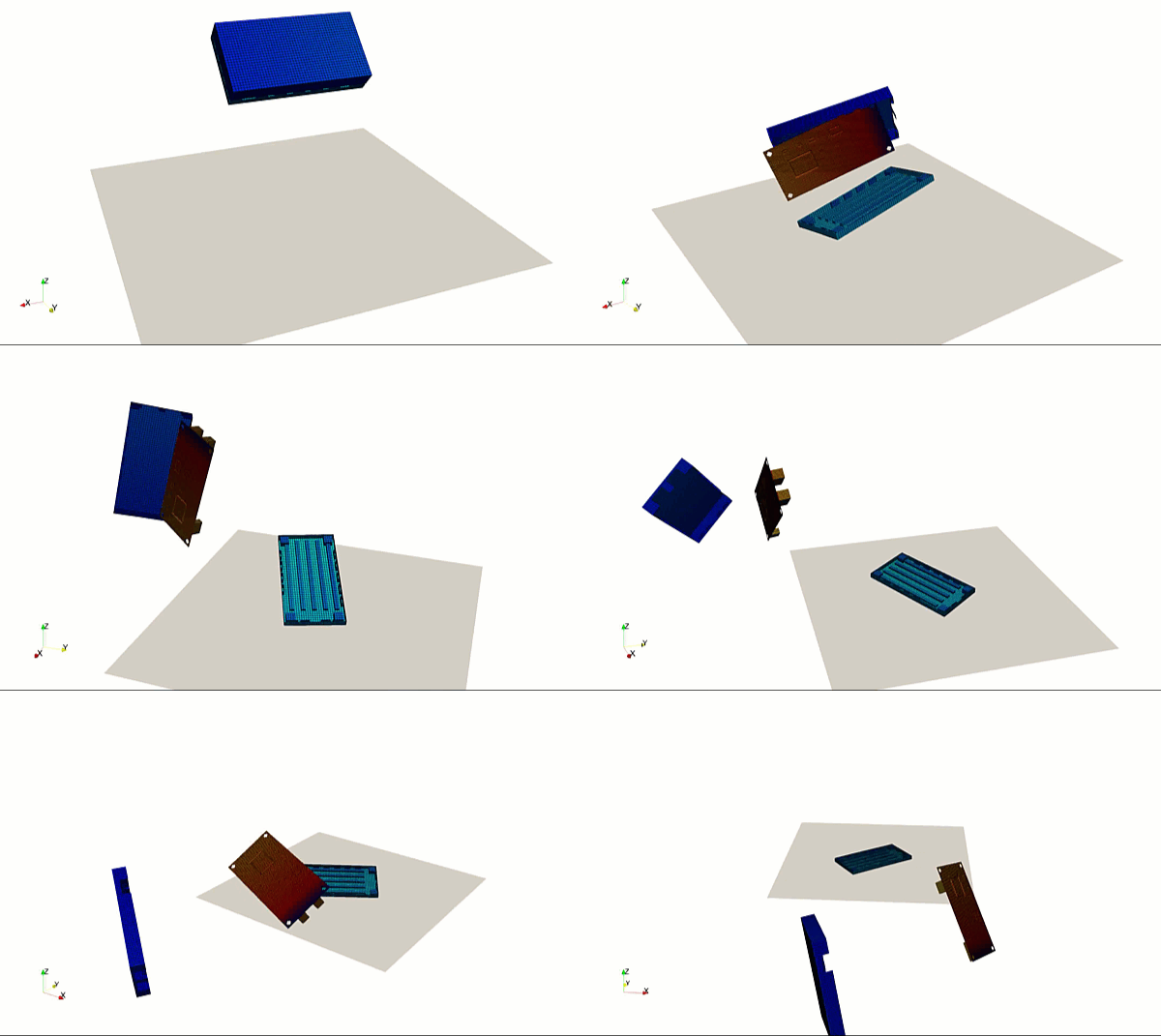
By identifying high-stress concentration points through FEA, designers can strategically reinforce weak areas with ribs or thicker walls, while thinning out regions that experience minimal stress. This precise application of material reduces the overall weight of the enclosure, saving on raw material costs and shipping expenses. More importantly, virtual drop testing ensures that the final product meets rigorous industry durability standards on the first try. Reducing the likelihood of cracked casings or broken internal connectors translates directly into lower return rates and higher customer satisfaction.
Streamlining Corporate Business Processes
Beyond the immediate technical benefits, embedding CAE into the corporate workflow optimizes broader business processes and cross-departmental collaboration. Detailed digital simulations yield quantitative data that can be used to justify engineering decisions to stakeholders, executives, and investors. Instead of presenting a vague estimate of product durability, product managers can showcase visual stress maps and thermal graphs that prove the design is robust. This data-driven approach removes ambiguity from executive decision-making, ensuring that capital is allocated efficiently and project milestones are met predictably.
Additionally, CAE fosters an environment of continuous improvement and intellectual property development. Digital simulation models serve as a reusable knowledge base; the insights gained from optimizing one enclosure can be easily applied to future product lines. This repeatability standardizes the engineering workflow, making it easier to onboard new team members and maintain design consistency across diverse portfolios. By transforming product development from a reactive, problem-solving routine into a proactive, data-verified process, companies can operate with greater agility and scale their operations smoothly.
Partnering with Tensor Engineering for Physical Design Excellence
Navigating the complexities of CAD, CFD, and FEA requires specialized expertise and powerful computing infrastructure that can be challenging to build and maintain internally. Tensor Engineering has been providing expert physical design consulting services since 2013 to help companies overcome these exact engineering challenges. By partnering with Tensor Engineering, your business gains immediate access to seasoned simulation professionals who seamlessly integrate into your development pipeline. Whether you are a fast-growing startup looking to launch your first hardware product or an established company aiming to optimize an existing product line, Tensor Engineering delivers the precise analysis and actionable design modifications needed to ensure success.
From initial geometric layout in CAD to advanced thermal optimization via CFD and rigorous impact simulation using FEA drop testing, Tensor Engineering handles the heavy lifting of physical verification. This partnership allows your internal teams to focus on core product features and market strategy while ensuring your enclosures are durable, efficient, and cost-effective. By leveraging over a decade of consulting experience, Tensor Engineering helps your company minimize prototype failures, drastically cut development costs, and accelerate your time-to-market, turning complex engineering hurdles into clear competitive advantages.
Author: Caesar Wiratama
Find me on Linkedin