
The Core Purpose of Blender
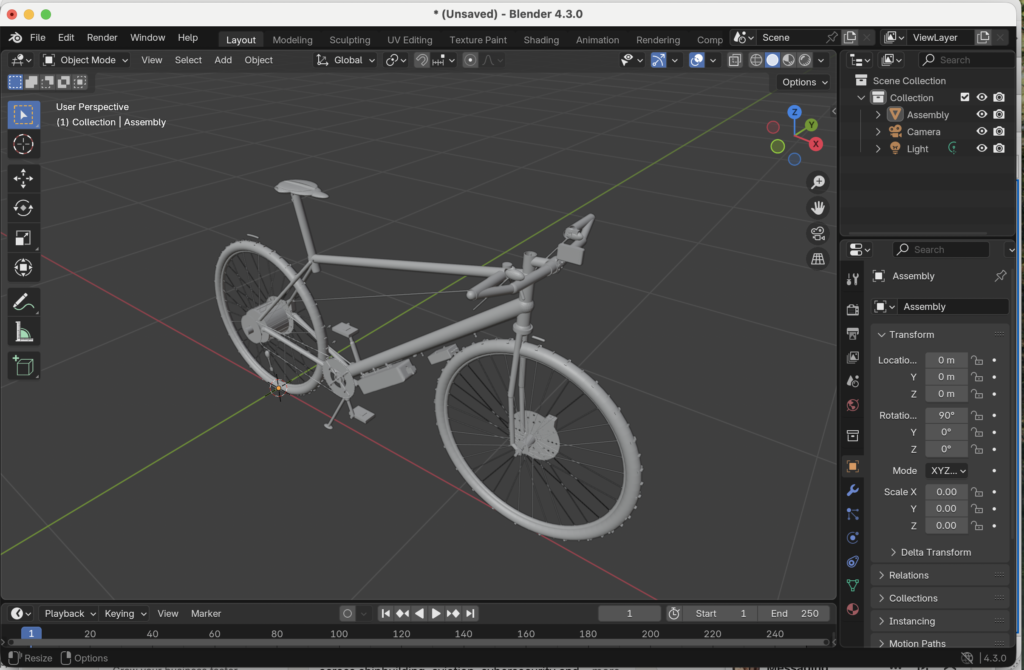
Blender is a completely free, open-source 3D creation suite designed to handle every step of the three-dimensional computer graphics pipeline. It provides tools for modeling objects, animating characters, simulating physics, rendering images, and editing videos within a single application. Because it requires no licensing fees, it is used globally by individual hobbyists, indie game developers, and professional animation studios alike.
The Origins of Blender
The software was originally created in 1994 by Ton Roosendaal as a proprietary tool for a Dutch animation studio. After the studio closed, a historic crowdfunding campaign in 2002 raised enough money from users to purchase the software’s rights and release it to the public. Today, it is maintained by the Blender Foundation and supported by a massive global community of developers who continuously update its features.
Comprehensive Modeling and Sculpting Tools
Blender allows artists to build three-dimensional shapes using two distinct methods. Traditional mesh modeling lets users manipulate individual points, lines, and faces to create geometric objects like buildings, vehicles, and daily items. Digital sculpting, on the other hand, mimics working with virtual clay, enabling artists to use stylized brushes to carve highly organic details into characters, monsters, and terrain.
Animation and Physics Simulation
Beyond creating static objects, Blender features a robust animation system that brings characters and environments to life. Artists can build complex skeletal structures inside their models to control movement through a timeline interface. The software also includes advanced physics engines capable of simulating realistic real-world behaviors, such as flowing water, billowing smoke, crackling fire, and the natural draping of clothing fabrics.
Powerful Rendering Engines
To turn 3D models into final images or movies, Blender utilizes built-in rendering systems that calculate how light interacts with digital materials. Its primary engine, Cycles, uses ray-tracing technology to simulate photorealistic lighting, shadows, and reflections. It also features a real-time engine called Eevee, which allows artists to preview their scenes instantly and render animations much faster than traditional methods.
Customization and Scripting
The software is highly adaptable to different production workflows and runs identically across Windows, macOS, and Linux. For advanced users, Blender integrates a powerful Python scripting interface that allows for deep customization. Creators can use scripts to automate repetitive tasks, generate complex procedural geometry, or build entire custom add-ons that add new functionality to the software.
Author: Caesar Wiratama
Find me on Linkedin
Related Search: FreeCAD Freelancing Service, code_aster Freelancing Service, Calculix Freelancing Service, OpenRadioss Freelancing Service, OpenFOAM Freelancing Service,